Best Omega-3 Fish Oil Supplements for Senior Dogs with Joint Pain
Joint pain is one of the most common struggles for senior dogs, and omega-3 fish oil is one of the most research-backed supplements to help. This guide breaks down the best options by form, potency, and your dog's specific needs — so you can make a confident, informed choice.
12 min read · Updated 7/17/2026 · by Rafael Marques

If your senior dog has been slowing down on walks, struggling to get up from their bed, or flinching when you scratch their lower back, joint pain is likely the culprit — and you're probably already wondering what you can do to help. Omega-3 fish oil supplements for senior dogs with joint pain have become one of the most widely recommended tools in a pet owner's toolkit, and for good reason: the science behind EPA and DHA (the active omega-3 fatty acids in fish oil) and inflammation relief is genuinely solid.
But walk into any pet store or scroll through Amazon, and you'll quickly find yourself overwhelmed. Soft chews, liquid oils, capsules, krill-based, sardine-based, salmon-based — the options are dizzying. Not all fish oil supplements are created equal, and choosing the wrong one means your arthritic 10-year-old Lab could be getting a fraction of the EPA and DHA they actually need.
This guide is here to cut through the noise. We'll cover the top picks, what makes each one worth considering, and a clear buyer's checklist so you know exactly what to look for before you buy.
Quick Picks: Best Omega-3 Fish Oil for Senior Dogs with Joint Pain
📝 Editor's note: Our little old ones — just like us — need supplements to help maintain their health. Don't skip out on basic supplementation for them; it really makes a difference in keeping their golden years comfortable and peaceful.
Before we dig into the details, here's a fast summary for busy pet parents:
- Zesty Paws Pure Wild Alaskan Salmon Oil — Best overall liquid oil for large senior dogs
- Nordic Naturals Omega-3 Pet Soft Gels — Best for picky eaters and precise dosing
- Grizzly Pollock Oil — Best budget-friendly option with clean ingredients
- Nutramax Welactin Canine Softgel Capsules — Best veterinarian-recommended formula
- PetHonesty Omega-3 Fish Oil Soft Chews — Best for seniors who refuse liquid or capsules
Why Omega-3 Fish Oil Works for Senior Dog Joint Pain
The Science Behind EPA and DHA
Fish oil is rich in two long-chain omega-3 fatty acids: eicosapentaenoic acid (EPA) and docosahexaenoic acid (DHA). In senior dogs with arthritis or degenerative joint disease, chronic inflammation in the joints is a primary driver of pain and stiffness. EPA in particular has been shown in peer-reviewed veterinary studies to suppress the production of pro-inflammatory compounds called prostaglandins and leukotrienes — essentially turning down the volume on the inflammatory process.
A landmark study published in the Journal of the American Veterinary Medical Association (JAVMA) found that dogs with osteoarthritis who received fish oil supplementation showed measurable improvements in their ability to bear weight and overall mobility compared to dogs who didn't. That's not a minor claim — that's clinical evidence.
DHA, on the other hand, is particularly valuable for senior dogs who are experiencing cognitive decline alongside joint issues — a common double whammy in dogs over age 10. DHA supports neurological function and may help slow the progression of canine cognitive dysfunction syndrome (CDS).
What Fish Oil Won't Do
To be fair and honest: fish oil is not a painkiller. It won't replace NSAIDs or prescription medications your vet may recommend for moderate-to-severe arthritis. Think of it as a long-game, anti-inflammatory foundation rather than acute pain relief. Most owners start noticing a difference in their dog's mobility and coat quality after 4 to 8 weeks of consistent supplementation.
⚠️ Always consult your veterinarian before starting any new supplement, especially if your senior dog is already on medication. Fish oil can interact with blood-thinning drugs and may not be appropriate for dogs with certain health conditions like pancreatitis.
The Top 5 Omega-3 Fish Oil Supplements for Senior Dogs
1. Zesty Paws Pure Wild Alaskan Salmon Oil — Best Overall Liquid Oil
What it is: A liquid pump-bottle salmon oil sourced from wild-caught Alaskan salmon, designed to be drizzled directly over your dog's food.
Key specs:
- EPA: ~380 mg per teaspoon (5 mL)
- DHA: ~240 mg per teaspoon
- Source: Wild-caught Alaskan salmon
- Form: Liquid pump bottle (8 oz, 16 oz, 32 oz)
- Additives: None — single-ingredient product
Pros:
- Easy to dose precisely based on your dog's weight
- Highly palatable — most dogs love the smell and will eagerly eat food they'd otherwise ignore
- No fillers, no artificial preservatives, no unnecessary extras
- Larger bottles offer good value per serving for big dogs
- Wild-caught source reduces risk of contaminants compared to farmed fish
Cons:
- Liquid oils can go rancid faster once opened; needs refrigeration and use within 60–90 days
- Per-milligram EPA/DHA concentration is lower than some pharmaceutical-grade options
- The pump can be messy if you're not careful
Best for: Large to giant breed senior dogs (60 lbs and up) like Labs, Golden Retrievers, German Shepherds, and Great Danes who need higher doses and aren't picky about food toppers. Also great if you have multiple dogs.


Native Pet Omega 3 Fish Oil for Dogs & Cats - Wild Alaskan Salmon Oil Liquid Supplement - Skin and Coat Support - 8 oz
$16.99
*Affiliate link
2. Nordic Naturals Omega-3 Pet Soft Gels — Best for Precise Dosing and Picky Eaters
What it is: Soft gel capsules containing purified, concentrated omega-3s from wild-caught anchovies and sardines. Nordic Naturals is one of the most respected names in human omega-3 supplementation, and their pet line holds up to the same rigorous standards.
Key specs:
- EPA: ~438 mg per soft gel
- DHA: ~250 mg per soft gel
- Source: Wild-caught anchovies and sardines (IFOS certified)
- Form: Soft gel capsules (90-count, 180-count)
- Third-party tested: Yes — IFOS 5-star certification
Pros:
- IFOS-certified purity means no heavy metals, PCBs, or oxidation issues
- Soft gels are odor-sealed, making them easy to handle without the fishy smell
- Can be given whole (many dogs will take them like a treat), pierced and squeezed onto food, or hidden in a pill pocket
- Higher EPA/DHA concentration per serving than most liquid oils
- Triglyceride form (not ethyl ester) — better absorbed by dogs
Cons:
- Higher price point than liquid oils, especially for large dogs needing multiple capsules per day
- Capsule size may be hard for very small senior dogs to swallow whole
- Some dogs refuse them even hidden in food
Best for: Small-to-medium senior dogs (under 50 lbs) where precise dosing is important, or any dog whose owner wants pharmaceutical-grade purity with third-party testing documentation.
3. Grizzly Pollock Oil — Best Budget-Friendly Option
What it is: A liquid fish oil made from wild-caught Alaskan pollock — a white fish that's often lower in potential contaminants than fatty fish like salmon, and more sustainable to boot.
Key specs:
- EPA: ~300 mg per teaspoon (5 mL)
- DHA: ~200 mg per teaspoon
- Source: Wild-caught Alaskan pollock (MSC-certified sustainable)
- Form: Liquid pump bottle (8 oz, 32 oz)
- Additives: Vitamin E (as a natural preservative)
Pros:
- One of the most affordable quality fish oils on the market
- MSC (Marine Stewardship Council) sustainability certification — good for eco-conscious pet parents
- Pollock has a milder smell than salmon, which some dogs (and owners) prefer
- Added Vitamin E helps stabilize the oil and provides an antioxidant benefit
- Highly palatable for most dogs
Cons:
- EPA/DHA levels per teaspoon are slightly lower than salmon or anchovy-based products
- Liquid form means the rancidity concern applies here too
- Doesn't have the same third-party purity certification as Nordic Naturals
Best for: Budget-conscious owners with medium-to-large senior dogs who want a clean, simple product without breaking the bank. Excellent first fish oil for pet parents just starting out.
4. Nutramax Welactin Canine Softgel Capsules — Best Veterinarian-Recommended Formula
What it is: Welactin has been a veterinary-recommended staple for over two decades. Made by Nutramax Laboratories — the same company behind Cosequin and Dasuquin — this soft gel is formulated specifically for canine health with a concentrated omega-3 profile.
Key specs:
- EPA: ~600 mg per capsule
- DHA: ~400 mg per capsule
- Source: Cold-water fish (anchovy and sardine blend)
- Form: Softgel capsules (60-count, 120-count)
- Third-party tested: Yes (Nutramax internal quality control + NASC certified)
Pros:
- Among the highest EPA/DHA concentrations available in an OTC pet supplement
- NASC (National Animal Supplement Council) quality seal
- Widely recommended by veterinarians and veterinary nutritionists
- Great option for dogs who need therapeutic-level omega-3 support for significant joint disease
- No unnecessary additives
Cons:
- Premium price point — one of the pricier options
- Capsule size is larger, which can be tricky for small dogs
- Not available in liquid form
Best for: Senior dogs with moderate-to-severe arthritis or degenerative joint disease who need a higher therapeutic dose, or any pet parent whose vet has specifically recommended omega-3 supplementation as part of a joint health protocol.
5. PetHonesty Omega-3 Fish Oil Soft Chews — Best for Seniors Who Refuse Liquid or Capsules
What it is: Omega-3 supplementation delivered in a soft chew treat format, combining fish oil with additional joint-supportive ingredients.
Key specs:
- EPA + DHA: ~300 mg combined per chew
- Source: Wild-caught Alaskan pollock and salmon
- Form: Soft chews (90-count bag)
- Added ingredients: Vitamins C and E, biotin
- NASC certified: Yes
Pros:
- By far the easiest administration method — dogs think it's a treat
- Added Vitamins C and E provide antioxidant support alongside the omega-3s
- NASC quality seal provides consumer confidence
- Great for multi-benefit convenience (no measuring, no mess)
- Palatable for even the pickiest senior dogs
Cons:
- Lower EPA/DHA concentration per serving compared to pure oils or capsules — may not be enough for large dogs with serious joint disease
- Soft chews contain more ingredients (binders, flavorings), which some sensitive dogs may react to
- More expensive per milligram of EPA/DHA than liquid oils
- Not ideal if your dog needs a very precise, high therapeutic dose
Best for: Small senior dogs (under 30 lbs) with mild-to-moderate joint discomfort, or any senior dog who flatly refuses other forms of supplementation. Also a great "starter" product for newly diagnosed dogs while you and your vet figure out the full treatment plan.
Dosing Guide: How Much Omega-3 Does a Senior Dog Need?
Dosing omega-3s for joint support is where many pet parents go wrong. The key is to aim for an adequate EPA+DHA dose based on your dog's body weight, not just the product's recommended serving size (which is often conservative for therapeutic use).
The Veterinary Oral Health Council (VOHC) and most board-certified veterinary nutritionists suggest targeting approximately 20–55 mg of EPA+DHA per kilogram of body weight per day for joint support. Here's a rough breakdown:
| Dog Weight | Approximate Daily EPA+DHA Target |
|---|---|
| 10 lbs (4.5 kg) | 90–250 mg |
| 25 lbs (11.3 kg) | 225–620 mg |
| 50 lbs (22.7 kg) | 450–1,250 mg |
| 75 lbs (34 kg) | 680–1,870 mg |
| 100 lbs (45 kg) | 900–2,475 mg |
🐾 Work with your veterinarian to determine the right dose for your individual dog. Dogs with kidney disease, clotting disorders, or pancreatitis may require different guidelines.
How to Choose the Right Fish Oil: Buyer's Checklist
Use this checklist before purchasing any omega-3 supplement for your senior dog:
- ✅ Check the EPA and DHA milligrams per serving — not just "omega-3s." The total omega-3 number is misleading; EPA and DHA are what matter for joint inflammation.
- ✅ Look for wild-caught sources — wild-caught fish are generally lower in contaminants than farmed fish.
- ✅ Prioritize third-party testing — look for IFOS certification, NASC seal, or NSF certification to verify purity and potency claims.
- ✅ Choose triglyceride form over ethyl ester — triglyceride-form omega-3s are absorbed significantly better by dogs.
- ✅ Match the form to your dog's personality — a liquid is great for food-motivated dogs; capsules or chews work better for picky eaters.
- ✅ Check for unnecessary additives — artificial flavors, colors, or fillers have no place in a quality fish oil supplement.
- ✅ Consider your dog's size — large breeds need much higher doses, so liquid oils are often more economical.
- ✅ Look at shelf life and storage — fish oil goes rancid. Always check expiration dates and refrigerate after opening.
- ✅ Avoid products that make dramatic cure claims — no supplement can "cure" arthritis. Be skeptical of over-the-top marketing language.
Other Ways to Support a Senior Dog's Joints
Fish oil works best as part of a comprehensive joint health strategy. Here are additional approaches to discuss with your vet:
- Best glucosamine supplement for dogs: Often paired with fish oil for synergistic joint cartilage support.
- Weight management: Every extra pound of body weight puts approximately 3–4 lbs of additional pressure on a dog's joints. Keeping your senior dog lean is one of the most powerful interventions available.
- Best orthopedic dog bed for hip dysplasia: Memory foam dog beds reduce pressure on arthritic joints during rest — the time dogs spend in bed increases significantly as they age.
- Low-impact exercise: Gentle daily walks, swimming, and canine hydrotherapy help maintain muscle mass and joint flexibility without impact stress.
- Prescription medications: For moderate-to-severe arthritis, your vet may recommend NSAIDs, Librela (monoclonal antibody therapy), or other prescription options. Supplements are a complement to — not a replacement for — veterinary care.
Our Top Recommendation
For most senior dogs with joint pain, Nutramax Welactin offers the best combination of high EPA/DHA concentration, veterinary credibility, and third-party quality assurance — especially if your dog is dealing with noticeable joint stiffness or has been diagnosed with arthritis. If you're working with a tight budget, Grizzly Pollock Oil is an honest, clean product that still delivers real results. And if your dog wouldn't touch a fish-flavored topper with a ten-foot pole, PetHonesty Soft Chews are your best bet for consistent daily dosing.
Whatever you choose, the most important step is consistency. Omega-3s work gradually — give it at least 6–8 weeks before evaluating whether the supplement is making a difference, and always loop in your veterinarian as a partner in your senior dog's care.
⚕️ Important: This article is for information only and isn't a substitute for advice from a licensed veterinarian. Always talk to your vet before changing your senior pet's diet, supplements, or treatment.
Recommended products
Native Pet Omega 3 Fish Oil for Dogs & Cats - Wild Alaskan Salmon Oil Liquid Supplement - Skin and Coat Support - 8 oz
$16.99
*Affiliate link
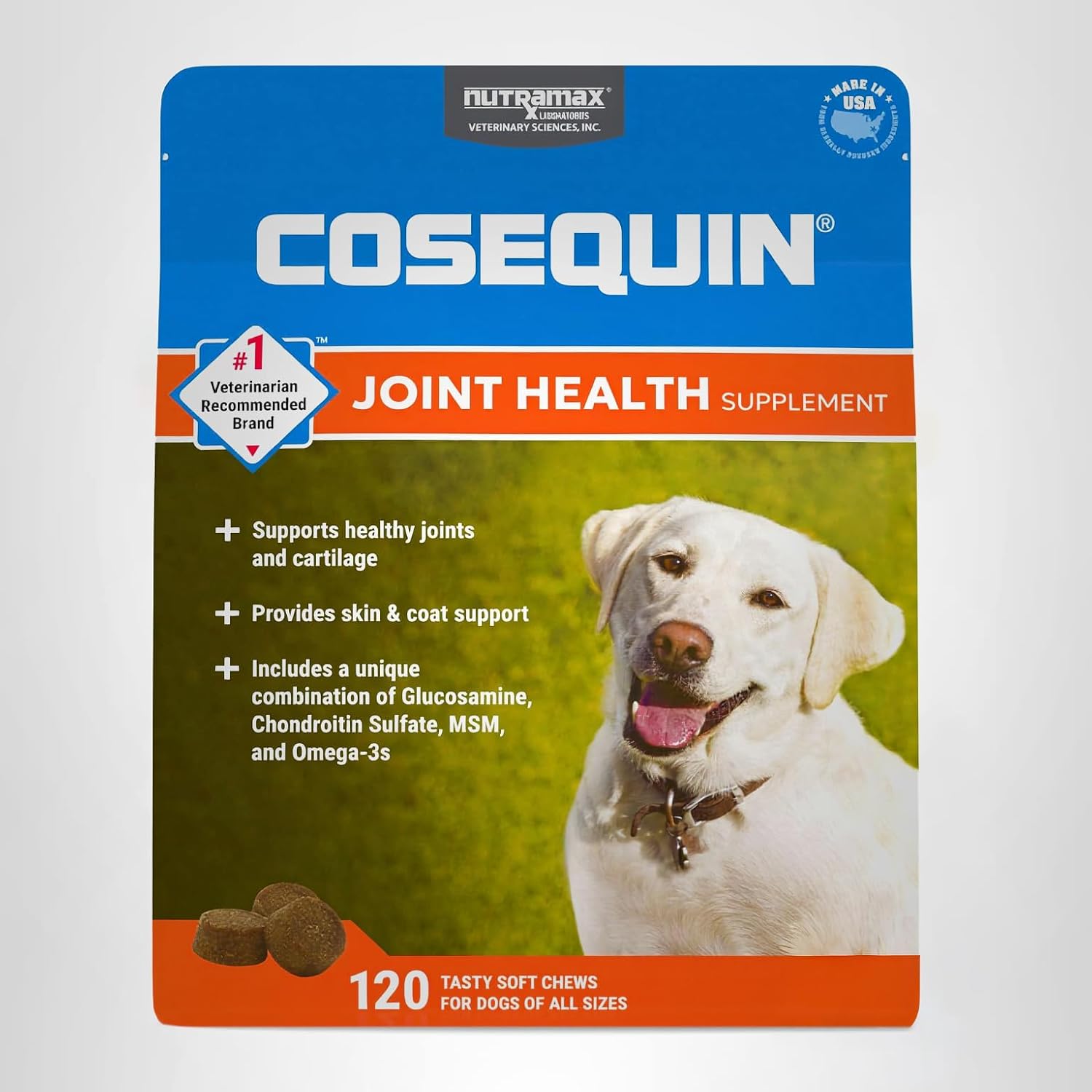
Nutramax Cosequin for Dogs Joint Health Supplement, Contains Glucosamine, Plus Chondroitin, MSM and Omega-3s, Supports Joint and Skin and Coat Health, Soft Chews, 120 Count
$39.99
*Affiliate link
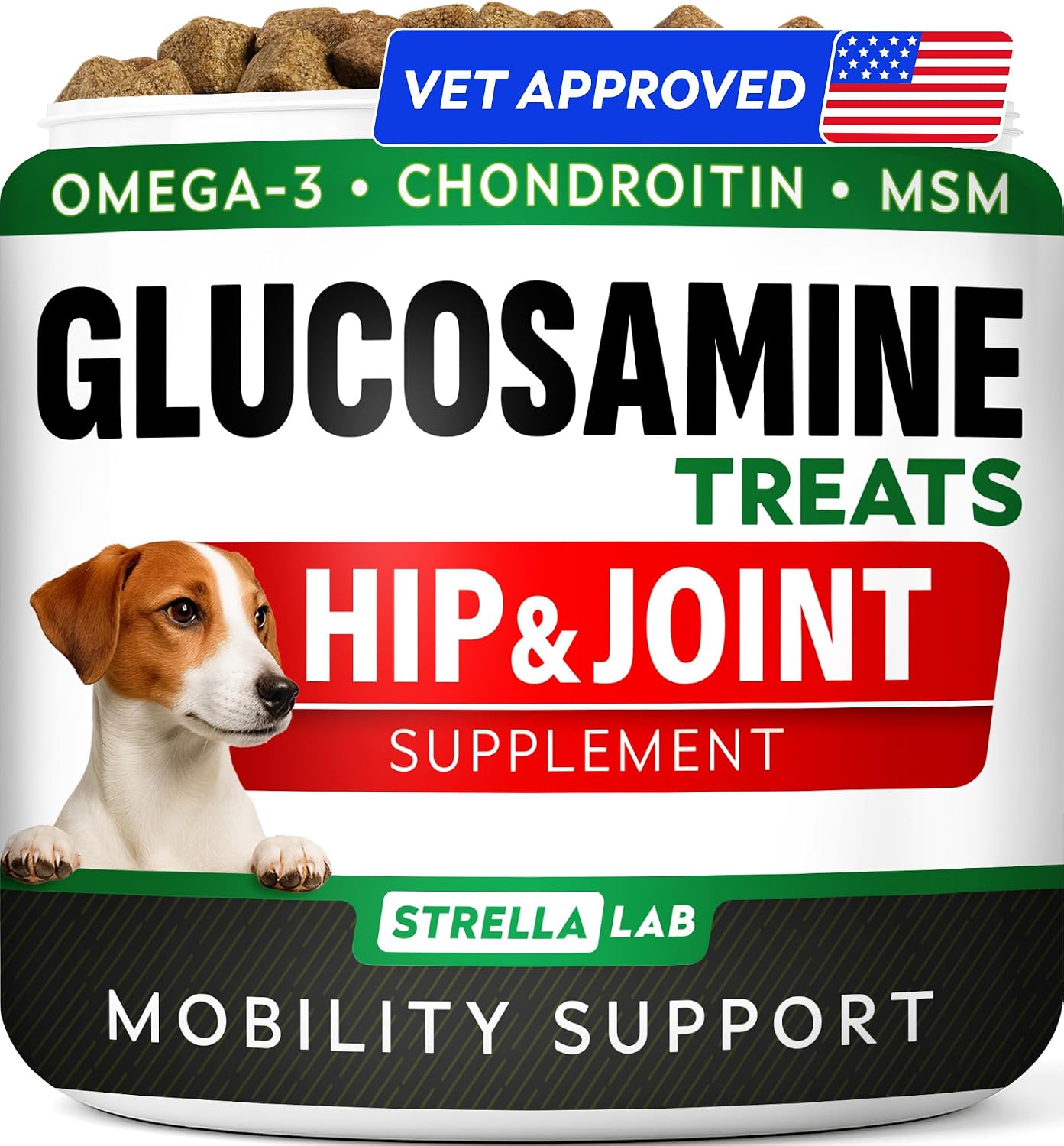
Glucosamine Treats for Dogs - Joint Supplement w/Omega-3 Fish Oil - Chondroitin, MSM - Advanced Mobility Chews - Joint Pain Relief - Hip & Joint Care - Chicken Flavor - 120 Ct - Made in USA
$17.94
*Affiliate link
Frequently asked questions
How long does it take for fish oil to work for joint pain in senior dogs?
Most pet owners start noticing improvements in mobility, stiffness, and coat quality after about 4 to 8 weeks of consistent daily supplementation. Omega-3s work by gradually reducing systemic inflammation, not by providing immediate pain relief like a medication would. Patience and consistency are key — don't give up after just a week or two.
Can I give my senior dog human fish oil capsules instead of a pet-specific product?
In many cases, yes — plain human fish oil capsules (with no added ingredients like xylitol or flavorings) can be used for dogs. However, you'll need to calculate the dose carefully based on your dog's weight and the EPA/DHA content of the capsule. Always check with your veterinarian first, especially for senior dogs on other medications.
Can too much fish oil hurt my senior dog?
Yes, excessive fish oil can cause side effects including diarrhea, vomiting, fishy breath, reduced immune function, and in rare cases, delayed wound healing due to blood-thinning effects. Very high doses over a long period can also interfere with Vitamin E levels. Stick to dosing guidelines recommended by your veterinarian and always start with a lower dose and work up gradually.
Is salmon oil or sardine/anchovy oil better for senior dogs with arthritis?
Both are effective sources of EPA and DHA, but sardine and anchovy-based oils often have a higher concentration of omega-3s per serving and tend to be lower in potential contaminants because these are smaller, shorter-lived fish. Wild-caught salmon oil is also a fine choice and tends to be more palatable for many dogs. The most important factor is the actual EPA and DHA milligram content on the label — check that first regardless of the fish source.
Should I give fish oil to my senior dog if they're already on joint medication?
This is a question your veterinarian must answer for your specific dog. Fish oil can complement prescription joint medications for many dogs, but it can also interact with NSAIDs or blood thinners. Never add a supplement to your senior dog's regimen without discussing it with your vet first — especially if your dog has been diagnosed with a chronic condition or is taking multiple medications.