How to Help a Dog Going Blind Adjust at Home
If your dog is losing their sight, the right home adjustments and daily routines can make a tremendous difference in their confidence and quality of life. This guide walks you through every step — from safety-proofing your space to rebuilding trust through sound and scent.
13 min read · Updated 7/6/2026 · by Rafael Marques

What Happens When a Senior Dog Starts Losing Their Vision
📝 Editor's note: It's always heartbreaking when our dogs start losing their vision. It's just one of those things that can happen as they get older — some breeds are more prone to it than others, but no matter what, it's on us to step up and help them navigate life safely. One of the simplest things you can do is rearrange or secure your furniture so they can move around the house without bumping into things or getting hurt. And if you have a pool in your backyard, this is really important — make sure that area is blocked off with small gates to keep your pup from accidentally falling in.
Watching your dog bump into furniture or hesitate at the top of the stairs is heartbreaking — but it doesn't have to mean the end of a happy, active life. Vision loss is one of the more common age-related changes in senior dogs, and most dogs adapt far better than their owners expect, especially with a little help from you.
Helping a dog going blind adjust at home is less about expensive equipment and more about consistency, patience, and a willingness to see your home from your dog's perspective. Dogs are remarkably resilient creatures, and once they learn to rely on their other senses — smell, hearing, and touch — many regain nearly full confidence in familiar surroundings.
This guide covers everything: understanding why vision loss happens, making your home safer, building a supportive routine, and knowing when to call your vet.
Why Do Senior Dogs Lose Their Vision?
Before you can help your dog adjust, it helps to understand what you're dealing with. Vision loss in older dogs usually has one of several root causes:
Cataracts
The most recognizable cause, cataracts appear as a bluish-white cloudiness in the lens of the eye. They're common in dogs over 8 years old and can progress slowly over months or rapidly over weeks. Some cataracts are surgically correctable — your veterinarian can refer you to a veterinary ophthalmologist to evaluate this option.
Nuclear Sclerosis (Lenticular Sclerosis)
This is often mistaken for cataracts, but it's a normal aging change. The lens becomes hazy and bluish, but most dogs retain functional vision. Your vet can tell these two conditions apart with a simple eye exam.
Progressive Retinal Atrophy (PRA)
PRA is a genetic condition that causes the retinal cells to degenerate over time. It's not painful, but it's not reversible. Dogs with PRA typically lose night vision first, then daytime vision over months to years.
Glaucoma
Glaucoma involves increased pressure inside the eye and can be very painful. If your dog is pawing at their eye, seems uncomfortable, or the eye looks red or enlarged, contact your vet immediately — this is an urgent situation.
Sudden Acquired Retinal Degeneration Syndrome (SARDS)
SARDS causes sudden, permanent blindness with no external signs of eye disease. It can be alarming for owners and dogs alike. A veterinarian must diagnose this condition.
Always consult your veterinarian if you notice any changes in your dog's eyes or behavior. Many causes of vision loss can be slowed, managed, or sometimes treated if caught early.
Recognizing the Signs That Your Dog Is Losing Their Sight
Dogs instinctively hide vulnerability, so vision loss can sneak up on you. Watch for these signs:
- Bumping into furniture or doorframes, especially in low light
- Hesitating at stairs or refusing to jump on/off furniture they used to love
- Startling easily when approached from the side or behind
- Reluctance to go out at night (often an early sign — dogs lose night vision first)
- Increased clinginess or anxiety near unfamiliar environments
- Eyes appearing cloudy, red, or enlarged
- Circling, confusion, or disorientation (these can also signal neurological issues — see your vet)
If you're noticing two or more of these, schedule a veterinary appointment. The sooner you get a diagnosis, the sooner you can start helping your dog adapt.
How to Make Your Home Safe for a Blind or Low-Vision Dog
Once your vet has confirmed vision loss, your most important job is turning your home into a safe, predictable environment. Here's how to do that room by room.
Keep Furniture in Place
This is the single most important rule. Your dog is already building a mental map of your home using memory, scent, and spatial awareness. Every time you rearrange the furniture, you erase part of that map. Once your dog is diagnosed, resist the urge to redecorate — consistency is kindness.
Block Off Hazards
Think about the danger zones in your home:
- Staircases — Use baby gates at both the top and bottom until your dog has learned to navigate them safely with your guidance.
- Swimming pools and water features — Fence these off completely. A blind dog can fall in and be unable to find the steps.
- Sharp furniture corners — Add foam corner guards (available at any hardware store for just a few dollars).
- Open fireplaces and space heaters — Use a fireplace gate or move space heaters out of your dog's walking paths.
Create Tactile Pathways
Dogs that are going blind will naturally follow walls and textures underfoot. You can help by:
- Placing a runner rug along hallways to guide your dog from room to room
- Using different-textured mats near the food bowl, the door to go outside, and the dog bed — each texture becomes a landmark
- Adding carpet runners on hardwood staircases so your dog can feel the change in surface before stepping up or down
Use Scent Markers
A dog's nose is exponentially more powerful than their eyes ever were. Scent becomes their new GPS:
- Dab a tiny amount of a distinct essential oil (lavender, for example) near the back door and a different scent near their feeding station. Use consistently and sparingly.
- Place a worn T-shirt or familiar-scented item near their sleeping area so they can locate it easily.
- Avoid heavy perfumes, air fresheners, or cleaning products near your dog's main pathways — conflicting smells are confusing.
Designate a Safe Zone
Set up a "home base" — a cozy, clearly defined area that is always the same. A dog bed with raised sides (often called a bolster bed) works well because the walls give tactile feedback. Place it in a low-traffic corner of a room where your dog spends most of their time. This becomes their anchor point when they're disoriented.

Amazon Basics Anti-Slip Self-Warming Pet Bed For Cat or Dog, Rectangle, Grey, 24"L x 20"W x 7"H
$33.24
*Affiliate link
Rebuilding Confidence: Training and Communication for a Blind Dog
A dog going blind doesn't stop learning — they just learn differently. Updating how you communicate is crucial.
Introduce Verbal Cues for Navigation
Start using consistent verbal warnings before any change in terrain:
- "Step up" before going up a curb or stair
- "Step down" before going down
- "Easy" when approaching a tight space or an obstacle
- "Watch" as a general caution cue
Pair these words with gentle physical guidance a few times, and most dogs pick them up quickly. These cues become a lifeline in unfamiliar places.
Announce Your Presence
Always speak softly before touching your dog, especially if approaching from the side or behind. Being startled can make an anxious dog nip reflexively — it's not aggression, just fear. A simple "hey, buddy" before you reach down eliminates most of this.
The same applies to children and visitors. Post a polite sign near your door reminding guests to speak before they pet.
Refresh Obedience Cues
Basic commands like "sit," "stay," "come," and "wait" become safety tools for a blind dog. A solid "wait" at the top of the stairs or before a street crossing can prevent serious accidents. Keep training sessions short (5–10 minutes), positive, and treat-based.
Use Sound to Guide Them
- Wear a small bell on your ankle around the house so your dog always knows where you are
- Buy or repurpose a pet halo (a lightweight bumper ring that attaches to a harness) — it buffers the dog's head from bumping into walls and furniture and is especially helpful during the adjustment period
- Shake a treat bag or use a clicker to call your dog to you rather than grabbing or pulling
Outdoor Safety for a Dog Going Blind
The outside world is less predictable than your living room, but that doesn't mean your blind dog can't enjoy it.
Stick to Familiar Routes
Walk the same neighborhood paths consistently. Your dog's nose will map every mailbox, fire hydrant, and tree on a well-worn route. New environments are much more disorienting, so save them for when your dog is further along in their adjustment.
Use a Harness with a Handle
A well-fitted harness with a top handle gives you far more control than a collar alone. You can gently steer, slow down, or lift your dog over an obstacle without yanking their neck.
Let Your Dog Sniff
Sniffing is mentally exhausting in the best way — it's a blind dog's version of reading the news. Allow plenty of sniff breaks on walks. A 20-minute sniff walk can be more satisfying than a 45-minute sighted walk used to be.
Consider a Dog Halo
Dog halos are lightweight bumper rings that attach to a vest or harness and extend in front of the dog's face. They detect obstacles before the dog's nose or face makes contact — think of them as a gentle bumper car system. Several veterinary behaviorists recommend them during the first few months of adjustment.
Nutrition and Supplements That Support a Senior Dog's Overall Health
Vision loss doesn't happen in isolation — it's usually part of the broader aging process. Supporting your dog's overall health can slow some types of degeneration and improve quality of life.
Antioxidant-Rich Diets
Oxidative stress plays a role in many age-related eye conditions. Look for senior dog foods that list whole proteins, omega-3 fatty acids (from fish oil or flaxseed), and vitamins C and E on the label.
Omega-3 Fatty Acids
EPA and DHA — the omega-3s found in fish oil — support both eye health and cognitive function in aging dogs. Many veterinary ophthalmologists recommend fish oil supplementation for dogs with PRA or early cataracts. Always ask your vet for the appropriate dose for your dog's weight before starting any supplement.
Joint Support
Blind dogs rely more heavily on physical confidence and mobility to navigate safely. A dog who is also in pain from arthritis will be far more hesitant to move around. Glucosamine and chondroitin supplements — combined with a vet-recommended exercise plan — can help keep senior dogs moving comfortably.
Cognitive Support
Some dogs experiencing vision loss also show signs of Canine Cognitive Dysfunction (doggy dementia), including nighttime pacing, disorientation, and changes in sleep patterns. Diets enriched with medium-chain triglycerides (MCTs), antioxidants, and B vitamins are sometimes recommended for cognitive support. Discuss this with your veterinarian.
A reminder: Never adjust your dog's diet or start supplements without consulting your veterinarian, especially for a senior dog with existing health conditions.
The Emotional Side: Supporting Your Dog — and Yourself
It's worth acknowledging: this is emotionally hard on you, too. Many owners feel guilt, grief, and helplessness when their dog loses their sight. That's completely normal. But here's what experienced veterinary professionals will tell you: your dog takes emotional cues from you. If you approach them with confidence and calm, they will mirror that energy.
What Your Dog Is Experiencing
Dogs don't catastrophize the way humans do. They don't lie awake worrying about the future. What they feel in the moment is confusion and anxiety — and both of those are things you can directly reduce through consistency, routine, and your reassuring presence.
Maintain Their Normal Routine
Feed at the same times. Walk at the same times. Play at the same times. Routine is a blind dog's best friend — it tells them exactly what to expect, which dramatically reduces anxiety.
Don't Baby Them to the Point of Helplessness
It's tempting to carry your dog everywhere or clear every obstacle before they reach it. Resist the urge. Dogs need the small wins of navigating successfully on their own — it builds confidence. Let them work through manageable challenges. Save the intervention for actual dangers.
Consider a Veterinary Behaviorist
If your dog's anxiety seems severe — excessive panting, house soiling, refusal to eat, or aggression — ask your vet for a referral to a veterinary behaviorist. There are safe, effective behavior modification approaches (and sometimes short-term medications) that can ease the transition.
When to Go Back to the Vet
Vision loss is not a one-time diagnosis and done. Keep an eye on these situations that warrant a follow-up call or visit:
- Pain signs: pawing at eyes, squinting, whimpering, redness, or excessive tearing
- Rapid progression of vision loss over days rather than weeks
- New neurological signs: circling, head tilting, seizures, or sudden collapse
- Significant behavioral changes: aggression, severe anxiety, or stopping eating
- Changes in the eye itself: cloudiness that suddenly worsens, eye discharge, or swelling
Some causes of blindness — like glaucoma or certain infections — are actively painful and require urgent treatment. When in doubt, call your vet.
A Quick Home Adjustment Checklist
Use this checklist as you prepare your home:
- Veterinary diagnosis confirmed and cause identified
- Baby gates installed at staircases
- Pool and water hazards fenced off
- Furniture arrangement frozen — no more rearranging
- Foam corner guards on sharp furniture edges
- Tactile pathway mats and rugs placed
- Scent markers in place at key locations
- Verbal navigation cues introduced ("step up," "step down," "watch")
- Dog harness with handle purchased
- "Announce your presence" rule shared with household members and visitors
- Safe zone / home base bolster bed set up
- Vet conversation completed about diet and supplements
Final Thoughts
Helping a dog going blind adjust at home takes patience, creativity, and a lot of love — but the good news is that most dogs make a remarkable recovery in confidence within weeks to months of diagnosis. Your home, your voice, and your daily routine are the most powerful tools you have.
The dogs who struggle most are often the ones whose owners treat them as fragile. The ones who thrive are the ones whose people trusted them, adapted alongside them, and kept showing up with a positive attitude and a full treat pouch. Be that person for your dog, and you'll both get through this together.
Recommended products
Amazon Basics Anti-Slip Self-Warming Pet Bed For Cat or Dog, Rectangle, Grey, 24"L x 20"W x 7"H
$33.24
*Affiliate link
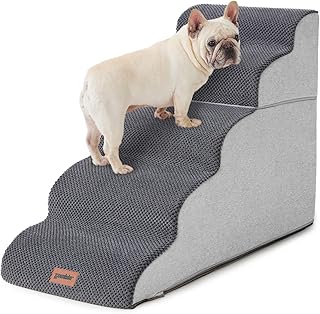
ZOMISIA Dog Stairs Ramp for High Beds, 5-Step Foam Pet Stairs for Couch
$49.99
*Affiliate link

Dog Lifting Sling / Lift Harness for Back Legs, Rear Leg Support for Large Dogs
$18.99
*Affiliate link
Frequently asked questions
Can a dog that is going blind still have a good quality of life?
Absolutely, yes. Dogs rely primarily on their sense of smell and hearing, and they adapt to vision loss far better than most owners expect. With a consistent home layout, clear verbal cues, and a stable routine, the majority of blind or visually impaired dogs continue to play, enjoy walks, and show obvious happiness. Quality of life depends much more on your approach and preparation than on the vision loss itself.
How long does it take for a blind dog to adjust to their home?
Most dogs show significant improvement in confidence and navigation within 4 to 8 weeks of their diagnosis, assuming the home environment has been made safe and consistent. Dogs that lose vision gradually (such as with progressive retinal atrophy) often adjust even more quickly because they've been unconsciously adapting over time. Dogs that go blind suddenly, like with SARDS, may need a bit more time and patience.
Should I rearrange my furniture to make it easier for my blind dog?
No — and this is one of the most important rules. Your dog is building a mental map of your home using memory and spatial sense. Every time furniture moves, that map is disrupted. The best thing you can do is keep everything exactly where it is. If you need to add something new (like a baby gate or a mat), introduce it gradually and guide your dog through the new layout a few times.
What is a dog halo and does my blind dog really need one?
A dog halo is a lightweight bumper ring that attaches to a harness and extends in front of your dog's face. It detects walls and furniture before the dog's head makes contact, reducing bumping and building confidence. Not every blind dog needs one — dogs that lose vision gradually often develop other compensatory strategies — but halos are very helpful for dogs that went blind suddenly or that are particularly anxious during the adjustment period.
Are there supplements that can slow vision loss in senior dogs?
Some research supports the use of omega-3 fatty acids (EPA and DHA from fish oil) and antioxidant-rich diets for supporting eye and retinal health in aging dogs. However, no supplement reverses vision loss that has already occurred, and no supplement should replace veterinary diagnosis and treatment. Always consult your veterinarian before starting any supplement, especially for a senior dog with other health conditions — the right dose and formula depend on your dog's weight, health history, and the underlying cause of their vision loss.