Best Calming Aids for Senior Dogs with Anxiety (2026 Guide)
Anxiety in older dogs is more common — and more complex — than most owners realize. This guide breaks down the best calming aids for senior dogs with anxiety, from supplements and chews to wraps and pheromone diffusers, so you can find the right fit for your aging companion.
14 min read · Updated 8/14/2026 · by Rafael Marques

Why Senior Dogs Get More Anxious — and Why It Matters
If your older dog has started pacing at night, barking at nothing, or clinging to you more than ever, you're not imagining things. Anxiety in senior dogs is genuinely more common than it is in younger pets — and the reasons run deeper than just a "nervous personality."
As dogs age, several things happen at once. Cognitive Dysfunction Syndrome (CDS), the canine equivalent of dementia, affects an estimated 14–35% of dogs over 8 years old and can cause disorientation, disrupted sleep cycles, and increased vocalization — all of which look a lot like anxiety. Hearing and vision loss can make the world feel unpredictable and frightening. Chronic pain from arthritis or other joint conditions makes dogs more reactive and irritable. And hormonal shifts change how the brain handles stress altogether.
This isn't just a comfort issue. Chronic anxiety raises cortisol levels, disrupts sleep, suppresses the immune system, and can worsen existing health conditions. Finding the best calming aids for senior dogs with anxiety isn't about spoiling your pet — it's a genuine quality-of-life intervention.
The good news: there are more effective, well-researched options than ever before. This guide walks you through all of them.
Quick Picks: Best Calming Aids for Senior Dogs at a Glance
📝 Editor's note: Anxiety is no joke — we feel the weight of it ourselves as humans, so just imagine what our senior dogs are going through. The difference is, they have to find some way to express it without being able to tell us what's wrong.
Before diving deep, here's a fast summary for busy owners:
- 🥇 Zesty Paws Calming Bites — Best all-around soft chew for daily anxiety management
- 🥈 Adaptil Calm Home Diffuser — Best pheromone option for noise phobias and home-based anxiety
- 🥉 Thundershirt Classic Anxiety Jacket — Best non-supplement option for situational anxiety (vet visits, storms)
- ⭐ VetriScience Composure Pro — Best for senior dogs with severe, ongoing anxiety who need a stronger formula
- ⭐ Nature's Sunshine Lavender Calming Spray — Best low-cost supplemental tool for mild anxiety
Understanding the Types of Anxiety in Senior Dogs
Not all anxiety is the same, and the best calming aid depends on what kind your dog is experiencing.
Situational Anxiety
Triggered by specific events — thunderstorms, fireworks, car rides, vet visits. Your dog is generally calm but falls apart in certain situations. These dogs respond well to fast-acting solutions like wraps, calming chews taken 30–60 minutes before the event, or short-term veterinary interventions.
Generalized / Chronic Anxiety
This is ongoing, low-level stress that doesn't tie to a single trigger. The dog seems restless, can't settle, follows you from room to room, or pants frequently. Daily supplements and pheromone diffusers are usually the backbone of managing this type.
Cognitive Dysfunction–Related Anxiety
Often called "sundowners" by owners, this type peaks in the late afternoon or evening. The dog appears confused, disoriented, or vocalizes without a clear reason. Behavioral support, environmental enrichment, and specific supplements (like melatonin or L-theanine) can help, but this type usually warrants a veterinary evaluation and possible prescription support.
Pain-Related Anxiety
A dog in pain is an anxious dog. If calming aids don't seem to help, unmanaged pain (especially arthritis) may be the underlying driver. Always rule this out with your vet before assuming the issue is purely behavioral.
The 7 Best Calming Aids for Senior Dogs with Anxiety in 2026
1. Zesty Paws Calming Bites — Best Overall Soft Chew
What it is: A chicken-flavored soft chew combining suntheanine (a patented form of L-theanine), melatonin, organic hemp, valerian root, and chamomile.
Key specs:
- Available in 90-count and 250-count bags
- Recommended serving: 1–4 chews depending on dog weight (follow label)
- No artificial preservatives; made in the USA
Who it's best for: Senior dogs with generalized anxiety or mild situational anxiety who enjoy treats and need something easy to administer. The soft texture is ideal for older dogs with dental sensitivity.
Pros:
- Multi-ingredient formula hits several calming pathways simultaneously
- Most dogs take them willingly without any tricks
- Melatonin content helps address nighttime restlessness — a huge plus for CDS-related anxiety
- Third-party tested, with a solid brand track record
Cons:
- Some senior dogs with food sensitivities may react to the chicken flavoring
- Melatonin content means it's not ideal right before a dog needs to be alert
- Results can take 2–3 weeks of daily use to be fully noticeable
Price tier: Mid-range (~$25–$35 for 90 count)
Verdict: The most versatile daily calming chew on this list. If you want to start somewhere, start here.
2. Adaptil Calm Home Diffuser — Best Pheromone Option
What it is: A plug-in diffuser that releases a synthetic version of the "dog appeasing pheromone" — a natural chemical nursing mothers emit that creates feelings of safety in dogs of all ages.
Key specs:
- One refill covers approximately 700 sq. ft. for 30 days
- Drug-free and odorless to humans
- Starter kits include the diffuser and one refill (~$35–$45)
Who it's best for: Senior dogs with noise phobias (thunderstorms, fireworks), separation anxiety, or CDS-related disorientation, especially when the anxiety is home-based. Also excellent as a complement to other calming strategies.
Pros:
- Completely passive — no pilling, no convincing the dog to eat something
- Works continuously in the background; great for dogs who are anxious around the clock
- Well-supported by veterinary and peer-reviewed research
- Safe alongside medications and supplements
Cons:
- Doesn't work for all dogs (roughly 60–70% see a meaningful improvement)
- Requires you to remember refills every 30 days
- Won't help for anxiety that happens away from home (travel, vet visits)
- Takes 7–14 days to reach full efficacy — not a quick fix
Price tier: Mid-range starter; ongoing refill cost of ~$20–$25/month

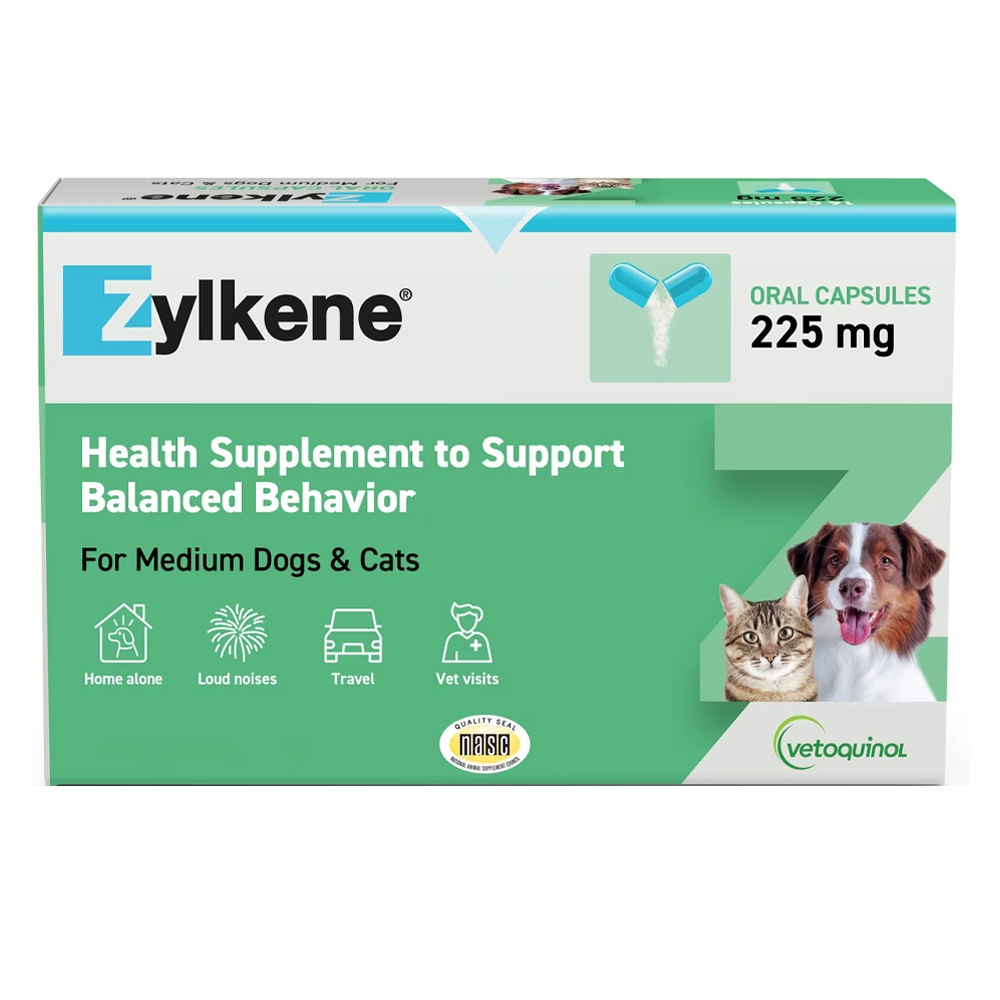
Zylkene Calming Supplement for Medium Dogs 225mg, 20 Tablets
$55.89
*Affiliate link
Verdict: One of the most evidence-backed, hassle-free options for home-based anxiety. Worth adding to almost any senior dog's calming routine.
3. Thundershirt Classic Anxiety Jacket — Best Non-Supplement Option
What it is: A snug-fitting wrap that applies gentle, constant pressure to the dog's torso — similar in concept to swaddling an infant. No drugs, no ingredients, just physics and proprioception.
Key specs:
- Available in sizes XS–XXL; a sizing chart based on weight is on the brand's website
- Machine washable
- One-time purchase (~$40–$50); comes with a satisfaction guarantee
Who it's best for: Senior dogs with situational anxiety (vet visits, storms, travel) who do well with physical comfort. Also a great option for owners who want to avoid any ingestible products, or whose dogs are on multiple medications already.
Pros:
- No drug interactions whatsoever — safe regardless of what your dog takes
- Immediate effect — put it on and see results within minutes for many dogs
- The brand reports 80% of dogs show improvement, which is backed by several independent studies
- Can be combined with chews or pheromones for a layered approach
Cons:
- Some dogs need a 1–2 week adjustment period before accepting the wrap
- Doesn't work well for all anxiety types — less effective for chronic, generalized anxiety used alone
- Requires you to be present to put it on; not useful for dogs alone during storms
- Can cause overheating in very warm climates if left on too long
Price tier: Budget-friendly (one-time cost)
Verdict: A must-have in your calming toolkit for acute situations. For a senior dog on a fixed-income owner's budget, this delivers a lot of value.
4. VetriScience Composure Pro — Best for Severe or Persistent Anxiety
What it is: A higher-potency version of VetriScience's popular Composure chew, formulated specifically for dogs with more significant anxiety. It contains Colostrum Calming Complex (C3), L-theanine, and thiamine (Vitamin B1).
Key specs:
- Available in 60-count bags
- Pro formula contains higher concentrations than the standard version
- Made in the USA; no artificial colors
Who it's best for: Older dogs who've already tried standard calming chews without adequate relief, or those managing moderate-to-severe generalized anxiety. Also well-suited for dogs undergoing major life changes (new home, loss of a companion pet).
Pros:
- Colostrum (bovine) has unique immune-modulating and anxiety-reducing properties not found in most competitors
- Thiamine supports nervous system function, which declines in aging dogs
- Veterinarian-recommended more often than most over-the-counter chews
- Can be used situationally OR daily
Cons:
- More expensive per chew than standard options
- Colostrum is a dairy-derived ingredient — not suitable for dairy-sensitive dogs
- The "pro" label can be confusing; it's still an OTC supplement, not a prescription
Price tier: Premium (~$40–$55 for 60 count)
Verdict: The go-to step-up when entry-level chews aren't cutting it. A smart bridge before discussing prescription options with your vet.
5. Rescue Remedy Pet Drops — Best Natural/Homeopathic Option
What it is: A Bach flower remedy blend — Rock Rose, Impatiens, Clematis, Star of Bethlehem, and Cherry Plum — diluted in a glycerin base (alcohol-free for pets). It's one of the oldest and most widely used calming remedies in natural pet care.
Key specs:
- Administered in water, food, or directly on gums/paws
- 20 mL and 200 mL bottles available
- No artificial ingredients; vegan; made in the UK to GMP standards
Who it's best for: Owners who prefer a natural, minimally processed approach, or dogs who are sensitive to multiple ingredients in complex chews. Good as a situational support tool.
Pros:
- Extremely gentle — very low risk of interaction with medications
- Easy to administer in water bowl (no convincing required)
- Flexible dosing; can be used situationally or daily
- Long shelf life; economical for infrequent use
Cons:
- Evidence base is largely anecdotal; flower remedies are not supported by robust clinical trials in dogs
- The glycerin base adds a sweet taste some dogs find off-putting in water
- May not be sufficient as a standalone aid for moderate-to-severe anxiety
Price tier: Budget-friendly (~$12–$20)
Verdict: A reasonable, low-risk add-on for mild anxiety or for very sensitive senior dogs. Manage expectations — it won't replace a stronger option for significant anxiety.
6. Purina Pro Plan Veterinary Supplements Calming Care — Best Probiotic-Based Option
What it is: A daily probiotic powder (Bifidobacterium longum BL999) shown in Purina's own research — and supported by independent studies — to reduce anxious behaviors in dogs by targeting the gut-brain axis.
Key specs:
- 30 single-serve packets per box
- Mix one packet into food daily
- Developed by Purina's research team; available through vets and online
Who it's best for: Senior dogs who need long-term anxiety management and whose owners also want to support digestive health — a real two-for-one for aging dogs, who commonly struggle with both GI issues and stress.
Pros:
- Addresses the microbiome-anxiety connection, which is an emerging and well-supported area of research
- Tasteless/odorless powder — virtually undetectable in food
- Supports overall gut health alongside anxiety, making it uniquely appropriate for senior dogs
- Recommended by many board-certified veterinary behaviorists
Cons:
- Requires consistent daily use for 6+ weeks before full effects are seen — patience required
- More expensive than many supplement options (~$50–$60 per box)
- Purina's research, while legitimate, is partly funded by the company itself
Price tier: Premium (~$50–$60/month)
Verdict: One of the most innovative calming options on the market in 2026. Ideal for the long haul, especially if your senior dog also has a sensitive stomach.
7. Melatonin Supplements for Dogs — Best for Nighttime & CDS-Related Anxiety
What it is: Melatonin is a naturally occurring hormone that regulates sleep-wake cycles. In dogs, it's available in chewable tablets, capsules, and liquids. Brands like Zesty Paws, Natrol, and several veterinary lines offer dog-specific melatonin products.
Key specs:
- Typical OTC canine formulations: 1 mg, 3 mg, and 5 mg
- Given 30–60 minutes before bedtime or a stressful event
- Critical note: Always choose formulations WITHOUT xylitol (a sweetener toxic to dogs — always check the label)
Who it's best for: Senior dogs experiencing nighttime restlessness, early-morning pacing, or disrupted sleep cycles — hallmarks of CDS. Also useful as a pre-event calming support.
Pros:
- Directly targets one of the most disruptive symptoms of senior dog anxiety: sleep disruption
- Well-tolerated by most dogs; very few side effects at appropriate doses
- Inexpensive and widely available
Cons:
- Dosing is not universally standardized for dogs — always consult your vet before starting
- May cause daytime drowsiness if given at the wrong time
- Dogs with immune conditions or those on certain medications should be cleared by a vet first
- Xylitol risk in human formulations is a genuine safety hazard
Price tier: Budget-friendly (~$8–$18)
Verdict: A targeted, affordable solution for nighttime anxiety and CDS-related sleep disruption. Always run it by your vet first.
How to Choose the Right Calming Aid for Your Senior Dog
With so many options, it helps to work through a simple checklist:
Buyer's Checklist
- ✅ Identify the anxiety type first. Situational? Daily? Night-only? CDS-related? Your answer narrows the field significantly.
- ✅ Consider your dog's age, size, and health conditions. A 13-year-old Labrador with arthritis and kidney disease has different needs than a 9-year-old Chihuahua with storm phobia.
- ✅ Check for current medications. Most supplements are safe alongside common senior dog meds, but always confirm with your veterinarian.
- ✅ Start with one product at a time. Adding multiple calming aids at once makes it impossible to know what's working — or causing a problem.
- ✅ Give it time. Most daily supplements need 2–6 weeks to show full effect. Be patient before giving up.
- ✅ Watch for side effects. Lethargy beyond mild relaxation, GI upset, or worsening anxiety are all signs to stop and contact your vet.
- ✅ Know when to escalate. If over-the-counter aids aren't providing meaningful relief within 4–6 weeks, your veterinarian may recommend prescription options like trazodone, gabapentin (for pain-related anxiety), or selegiline (specifically licensed for CDS in dogs).
Complementary Strategies That Boost Any Calming Aid
No calming aid works in a vacuum. These lifestyle strategies significantly improve outcomes:
- Maintain a consistent daily routine. Predictability is profoundly calming for anxious senior dogs. Feed, walk, and sleep at the same times every day.
- Provide mental enrichment. Gentle puzzle feeders and sniff walks engage the brain without overtaxing aging joints.
- Create a safe space. A dedicated, quiet area with a comfortable orthopedic bed, familiar scents, and low lighting can become your dog's anxiety refuge.
- Reduce sensory triggers. White noise machines help with noise phobias. Blackout curtains reduce visual triggers from storms.
- Consider canine massage. Gentle TTouch massage techniques are proven to reduce anxiety and are particularly beneficial for arthritic senior dogs, addressing both pain and stress simultaneously.
A Note on When to See Your Veterinarian
Over-the-counter calming aids are genuinely helpful for many senior dogs — but they're not the right first step in every case. Please consult your veterinarian if:
- Anxiety came on suddenly or intensified rapidly (this can signal an underlying medical cause)
- Your dog is showing signs of cognitive dysfunction (confusion, house-training accidents, getting "stuck" in corners)
- Anxiety is severe enough to cause self-injury, refusal to eat, or extreme physiological distress
- Your dog is already on multiple medications
- No OTC aid has helped after a consistent 4–6 week trial
A veterinary behaviorist or a vet with behavior training can create a comprehensive plan that combines medical treatment, behavior modification, and environmental changes — far more powerful than any single product.
Final Recommendation
For most senior dogs with everyday anxiety, the most effective starting strategy in 2026 is a layered approach: a daily soft chew like Zesty Paws Calming Bites for general support, an Adaptil diffuser for passive home-based calming, and a Thundershirt on standby for acute situations. If you're dealing with nighttime disruption tied to cognitive changes, add a vet-approved melatonin supplement.
If that combination isn't moving the needle after 6 weeks, step up to VetriScience Composure Pro or Purina Calming Care — and have a honest conversation with your vet about whether prescription support is the right next move.
Your senior dog has given you years of loyalty and love. Helping them feel safe and settled in their golden years is one of the most meaningful things you can do.
⚕️ Important: This article is for information only and isn't a substitute for advice from a licensed veterinarian. Always talk to your vet before changing your senior pet's diet, supplements, or treatment.
Recommended products
Zylkene Calming Supplement for Medium Dogs 225mg, 20 Tablets
$55.89
*Affiliate link

Canine Cognitive Support Soft Chews for Dogs - Great Tasting Health Supplement with B Vitamins and Antioxidants to Support The Brain Health of Your Senior Dog - 90 Soft Chews
$62.00
*Affiliate link

SEGMINISMART CEVA Animal Health D59010B Senilife Nutritional Supplement for Elderly Dogs - 30 capsules/box
$42.99
*Affiliate link
Frequently asked questions
At what age do dogs start showing anxiety related to cognitive decline?
Signs of Cognitive Dysfunction Syndrome (CDS), which often includes anxiety symptoms like nighttime restlessness, disorientation, and increased vocalization, can appear as early as age 8 in some breeds, though it's more common in dogs 11 and older. Larger breeds tend to show signs earlier than small breeds. If you notice a sudden or progressive change in your dog's behavior or awareness, talk to your veterinarian — CDS is diagnosable and manageable.
Are calming chews safe for senior dogs on heart or kidney medication?
Many calming supplements are generally considered safe alongside common senior dog medications, but 'generally safe' is not the same as 'safe for your specific dog.' Ingredients like melatonin, valerian root, and certain herbal compounds can interact with specific medications or be processed differently in dogs with reduced kidney or liver function. Always share a full list of your dog's current medications and supplements with your veterinarian before starting anything new.
How long does it take for calming supplements to work in older dogs?
It depends on the product and anxiety type. Fast-acting chews (used 30–60 minutes before a triggering event) can show results in under an hour for situational anxiety. Daily supplements like probiotic-based Purina Calming Care or L-theanine chews typically need 2–6 weeks of consistent use before you see the full benefit. Pheromone diffusers generally take 7–14 days. If you've used a product consistently for 4–6 weeks without meaningful improvement, talk to your vet about next steps.
Can I use multiple calming aids together for my senior dog?
Layering calming aids — for example, a pheromone diffuser plus a daily calming chew plus a Thundershirt for storms — is a common and often effective strategy. However, it's best to introduce one product at a time so you can identify what's working (and catch any adverse reactions). If you want to use multiple ingestible supplements simultaneously, consult your veterinarian first to make sure the combination is appropriate for your dog's health status.
When should I consider prescription anxiety medication for my senior dog?
Prescription medication is worth discussing with your vet if: over-the-counter aids haven't provided meaningful relief after 4–6 weeks of consistent use; the anxiety is severe enough to cause self-injury, refusal to eat, or extreme physical distress; anxiety came on suddenly (which can signal a medical cause); or your dog has been diagnosed with Cognitive Dysfunction Syndrome. Medications like trazodone, gabapentin, or selegiline (licensed specifically for CDS) can make a significant difference in quality of life and are safe when managed by a veterinarian.