Best Flea and Tick Treatment for Senior Dogs: Safe, Effective Options for Older Pups
Choosing the best flea and tick treatment for senior dogs takes more than picking the most popular product — older dogs have unique health needs that demand extra care. This guide breaks down the safest, most effective options and helps you find the right fit for your aging companion.
12 min read · Updated 11/1/2026 · by Rafael Marques

Keeping your older dog protected from fleas and ticks is just as important as it's ever been — arguably more so. But finding the best flea and tick treatment for senior dogs isn't as simple as grabbing whatever's on the shelf. Dogs in their golden years often carry a different health profile: reduced kidney and liver function, arthritis, heart conditions, cognitive changes, and a longer list of daily medications. The wrong product can interact badly with those realities.
The good news? There are genuinely excellent options out there for senior dogs — you just need to know what to look for, what to avoid, and how to match the product to your dog's specific situation. That's exactly what this guide does.
Always consult your veterinarian before starting any new flea or tick prevention regimen for your senior dog, especially if your dog takes other medications or has been diagnosed with kidney disease, liver disease, seizure disorders, or any chronic health condition.
Quick Picks: Best Flea and Tick Treatments for Senior Dogs
📝 Editor's note: With two dogs over 13, my calculation on flea and tick products changed. It stopped being about what kills fastest and became about what's gentlest on an aging liver and kidneys. Older dogs are more likely to be on other medication, and more likely to have reduced organ function nobody has tested for yet. So this guide leans on the safety side — what the active ingredients ask of the body, and which ones deserve a conversation with your vet before you buy. For a senior with any existing diagnosis, that conversation isn't optional.
Not much time? Here are our top picks at a glance:
- NexGard (afoxolaner chewable) — Best overall oral treatment for most senior dogs
- Bravecto (fluralaner chewable or topical) — Best for dogs whose owners struggle with monthly dosing
- Seresto Collar (imidacloprid + flumethrin) — Best slow-release option for dogs who resist pills and topicals
- Revolution Plus / Simparica Trio — Best for seniors who also need heartworm prevention in one product
- Vet's Best Flea & Tick Spray (plant-based) — Best natural/supportive option for very frail dogs or as a supplement to prescription treatment
Why Flea and Tick Treatment Is Different for Senior Dogs
Their Bodies Process Chemicals More Slowly
A 10-year-old Labrador doesn't metabolize medications the same way a 2-year-old Lab does. Aging livers and kidneys are less efficient at clearing compounds, which means some active ingredients can accumulate or linger longer than intended. This isn't a reason to skip parasite prevention — it's a reason to choose carefully and work with your vet. Understanding what to feed an aging dog is similarly important, as nutrition directly impacts organ function and medication metabolism.
They're Often on Other Medications
Senior dogs are frequently on NSAIDs for arthritis, phenobarbital for seizures, thyroid medications, heart drugs, or a combination of all of the above. Drug interactions are a real concern, particularly with spot-on treatments and certain oral isoxazolines (the class that includes NexGard, Bravecto, Simparica, and Credelio). Your vet's medication list review is non-negotiable.
Skin and Coat Changes Matter Too
Older dogs often develop thinner skin, reduced coat density, or seborrhea-related changes. Topical spot-on treatments that rely on spreading through skin oils may distribute less evenly on a senior dog's coat — something worth discussing with your vet when choosing between oral and topical formats.
Tick-Borne Disease Hits Harder in Senior Dogs
Lyme disease, Rocky Mountain spotted fever, anaplasmosis, and ehrlichiosis are serious for any dog — but a senior dog's immune system is less equipped to fight them off. Preventing tick attachment in the first place is the most powerful tool you have.
The Best Flea and Tick Treatments for Senior Dogs: Full Reviews
1. NexGard (Afoxolaner) — Best Overall Oral for Most Seniors
What it is: A monthly beef-flavored soft chew that works by inhibiting the nervous system of fleas and ticks. It's available by prescription in weight-based doses (4–10 lbs, 10–24 lbs, 24–60 lbs, 60–121 lbs).
How it works: After your dog chews it, afoxolaner enters the bloodstream. When a flea or tick bites, the compound disrupts their nervous system, killing them quickly — fleas within 4 hours, most ticks within 24–48 hours.
Key specs:
- Kills fleas, black-legged ticks, American dog ticks, lone star ticks, and brown dog ticks
- Monthly dosing
- FDA-approved; requires a prescription
- Safe for dogs 8 weeks and older, 4 lbs and up
Pros:
- No mess — no greasy residue on furniture or skin
- Most seniors take it willingly (it tastes like a treat)
- Easy to dose accurately by weight
- Strong efficacy data from clinical trials
Cons:
- Requires a vet visit/prescription (though that's a good thing for senior dogs)
- Part of the isoxazoline class — the FDA issued a warning in 2018 noting rare reports of neurological side effects (muscle tremors, ataxia, seizures) in some dogs; dogs with a history of seizures should be evaluated carefully
- No heartworm or intestinal parasite coverage
Best for: Healthy-to-moderately healthy senior dogs without a history of seizure disorders who need straightforward flea and tick control.
Approximate price: $55–$75 for a 3-pack, depending on weight class and retailer.


Flea & Tick Season Sale — Extra 10% Off + Free Shipping (Code SAVE10)
*Affiliate link
2. Bravecto (Fluralaner) — Best for Seniors When Monthly Dosing Is a Challenge
What it is: A chewable tablet (or topical spot-on) that provides 12 weeks of flea and tick protection in a single dose. Also an isoxazoline.
Key specs:
- Kills fleas and multiple tick species for 12 weeks (8 weeks for lone star ticks)
- Available as a chewable or a topical
- Prescription required
- For dogs 6 months and older, 4.4 lbs and up
Pros:
- Four doses a year instead of twelve — huge benefit for owners managing complex senior care routines
- Strong efficacy; 98–100% flea kill within 12 hours
- The topical version avoids the GI system entirely, which may suit dogs with sensitive stomachs or certain GI conditions
- Liver-flavored chew is generally well-accepted
Cons:
- Same isoxazoline class cautions as NexGard — neurological side effects are rare but possible
- The 12-week commitment means if your dog has a reaction, the compound is in their system longer
- Slightly higher upfront cost per dose (though roughly equivalent per month)
Best for: Senior dog owners who want fewer dosing events — great for dogs who travel, have complicated medication schedules, or live with caregivers who may struggle to remember monthly treatments.
Approximate price: $50–$65 per chew (covers 3 months).
3. Seresto Flea and Tick Collar — Best Slow-Release Option for Resistant Senior Dogs
What it is: An odorless, non-greasy collar that releases low concentrations of two active ingredients — imidacloprid (kills fleas) and flumethrin (repels and kills ticks) — continuously for up to 8 months.
Key specs:
- Covers up to 8 months per collar
- Repels ticks (they don't have to bite to be affected)
- Available in small dog and large dog sizes
- Over-the-counter — no prescription needed, though a vet check is still wise for seniors
Pros:
- No pills to hide in peanut butter, no spot-on application
- The "repel before bite" action is excellent for tick-heavy environments
- Very low systemic absorption — active ingredients stay mostly at the skin surface level
- Long duration makes it highly cost-effective (~$60 for 8 months)
- Good choice for senior dogs who are difficult to medicate orally
Cons:
- Must fit correctly — too loose and it won't work; check the two-finger rule regularly (you should fit exactly two fingers underneath)
- Not ideal for dogs who swim or bathe frequently (reduced efficacy, though water-resistant up to a point)
- Some dogs are sensitive to the collar material; monitor the neck area for irritation
- Cannot be combined with other imidacloprid-based topicals
Best for: Senior dogs who resist oral medications, dogs with GI sensitivity that rules out chewables, or dogs in multi-pet households where the owner prefers a set-it-and-forget-it approach.
Approximate price: ~$55–$65 per collar (8-month supply).
4. Revolution Plus or Simparica Trio — Best for Seniors Who Need Multi-Parasite Coverage
What they are: Prescription combination products that cover fleas, ticks, heartworm, and some intestinal parasites in one monthly dose.
- Revolution Plus (selamectin + sarolaner): Topical spot-on. Covers fleas, ticks (5 species), heartworm, ear mites, roundworms, and hookworms. For cats and dogs — confirm dog formulation with your vet.
- Simparica Trio (sarolaner + moxidectin + pyrantel): Oral chewable. Covers fleas, ticks, heartworm, roundworms, and hookworms.
Pros:
- Simplifies the senior dog's supplement and medication schedule significantly
- Heartworm prevention is critical for dogs in mosquito-prone areas — combining it removes one more thing to forget
- Simparica Trio is one of the most comprehensive single-dose options available
Cons:
- Simparica Trio contains sarolaner, another isoxazoline — same neurological caution applies
- Moxidectin in Simparica Trio requires caution in MDR1/ABCB1 gene mutation dogs (common in Collies, Australian Shepherds, Shetland Sheepdogs, and related breeds) — genetic testing is available and highly recommended for these breeds
- Revolution Plus is topical, so the spreading-on-senior-skin caveat from earlier applies
Best for: Senior dogs in heartworm-endemic regions (most of the US) who need streamlined parasite coverage. A particular standout for Collies and herding breed seniors after confirming MDR1 status with your vet.
Approximate price: Simparica Trio ~$60–$80 for 3 months; Revolution Plus ~$55–$75 for 3 months.
5. Vet's Best Flea & Tick Spray (Plant-Based) — Best Natural/Supportive Option
What it is: A spray-on formula using peppermint oil and eugenol (clove extract) as active ingredients. No synthetic pesticides.
Key specs:
- Safe for dogs 12 weeks and older
- Apply directly to coat, bedding, and home surfaces
- Over-the-counter, no prescription required
Pros:
- Appropriate for very frail senior dogs where owners or vets want to minimize chemical exposure
- Can be used on bedding, furniture, and around the home
- Pleasant scent (to humans); no chemical odor
- Affordable — around $10–$15 per bottle
Cons:
- Significantly less effective than prescription options — not a standalone solution in tick-heavy environments or during peak flea season
- Must be reapplied frequently (every few days to weekly)
- Some dogs are sensitive to essential oils, particularly around the face — avoid eyes, nose, and mouth
- Not a replacement for veterinary-grade prevention if your dog goes outdoors regularly
Best for: Very elderly or medically fragile dogs whose vets recommend minimizing systemic treatments, or as a supplemental tool for indoor seniors with limited outdoor exposure. Also useful for treating the home environment alongside a prescription collar or chewable.
How to Choose the Right Treatment for Your Senior Dog
Consider Your Dog's Health History First
Before anything else, share a complete list of your dog's current medications, diagnosed conditions, and known sensitivities with your vet. Pay special attention to:
- Seizure history → Avoid isoxazolines or use with extreme caution under close supervision
- Kidney or liver disease → Discuss metabolism of any oral compound with your vet
- MDR1 gene mutation (herding breeds) → Test before using moxidectin-containing products
- Heart conditions → Some active ingredients require caution; verify with your cardiologist if your dog sees one
Match the Format to Your Dog's Lifestyle
| Format | Best For | Avoid If |
|---|---|---|
| Oral chewable | Easy dosing, no residue on furniture | History of seizures, severe GI issues |
| Topical spot-on | Dogs who won't take pills | Thin/compromised skin, frequent bathers |
| Collar | Pill-resistant dogs, long-duration preference | Frequent swimmers, dogs with neck skin issues |
| Natural spray | Frail dogs, indoor use, home treatment | High tick exposure, standalone use |
Think About Your Region and Season
In the southern US, flea and tick season is effectively year-round. In the Northeast, Lyme-endemic regions demand robust tick prevention from March through November at minimum. Your dog's risk profile should drive the potency of the product you choose.
Don't Forget the Home Environment
Even the best treatment on your dog won't solve a flea infestation that's already in your carpet or yard. Wash your dog's bedding weekly in hot water, vacuum frequently (and dispose of the bag), and consider a home flea spray for the environment. Flea eggs and larvae in the environment are often the reason treatments seem to "stop working."
Buyer's Checklist: What to Look For
Before you buy, run through this list:
- ✅ Vet-approved for your dog's specific health profile and current medications
- ✅ Correct weight range — never split doses between sizes
- ✅ Appropriate active ingredient class — isoxazoline caution for seizure-prone dogs; moxidectin caution for herding breeds
- ✅ Format your dog will actually accept — the best product is the one your dog will take
- ✅ Coverage for your region's primary threats (Lyme? Rocky Mountain spotted fever? Heavy flea season?)
- ✅ Duration that fits your routine — monthly vs. every 3 months vs. 8-month collar
- ✅ Multi-parasite coverage if you're simplifying your dog's regimen
Our Top Recommendation for Most Senior Dogs
For the majority of senior dogs in good-to-moderate health, NexGard remains the most straightforward, well-studied, and widely trusted oral flea and tick treatment. It's easy to give, fast-acting, accurate to dose, and broadly effective against the tick species most dangerous to US dogs.
If your senior dog's schedule or health needs demand something different, Bravecto (for less frequent dosing), the Seresto collar (for pill-resistant dogs), or a combination product like Simparica Trio (for full parasite coverage in one dose) are all legitimate, effective alternatives.
The single most important step? Pick up the phone and call your vet before you buy. A senior dog's parasite prevention plan is best made as a partnership — your knowledge of your dog's daily habits combined with your vet's clinical knowledge of signs of dementia in senior dogs and their overall health profile is the winning combination.
Your older dog has given you years of loyalty. Keeping them comfortable, protected, and free from parasite-borne disease is one of the most practical ways to give back.
⚕️ Important: This article is for information only and isn't a substitute for advice from a licensed veterinarian. Always talk to your vet before changing your senior pet's diet, supplements, or treatment.
Recommended products

Black Friday in July Blowout — Up to 30% Off NexGard, Simparica Trio & More + Free Shipping
*Affiliate link
Flea & Tick Season Sale — Extra 10% Off + Free Shipping (Code SAVE10)
*Affiliate link
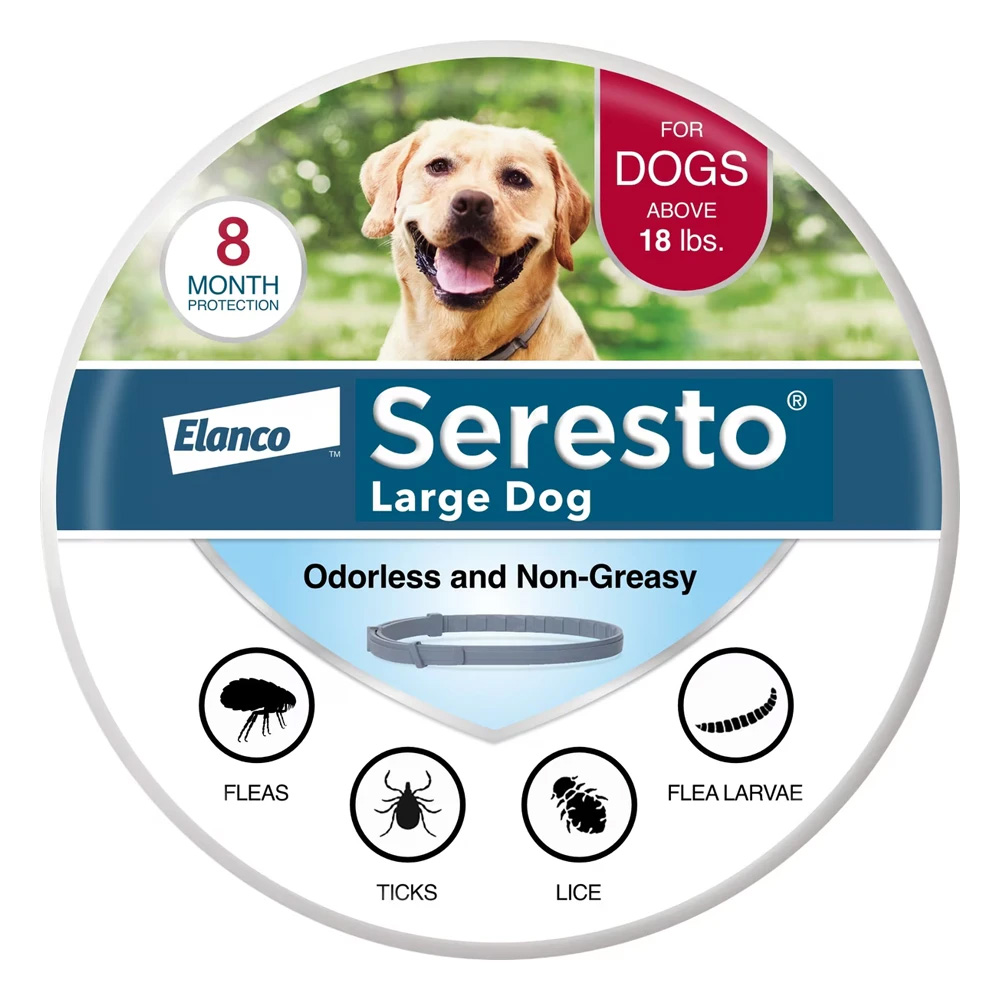
Seresto Flea & Tick Collar for Large Dogs (8-Month Protection)
$43.98
*Affiliate link
Frequently asked questions
Is it safe to use flea and tick treatments on a senior dog with kidney disease?
It depends on the specific product and the severity of the kidney disease. Some oral treatments are processed more heavily by the liver than the kidneys, while others may pose more concern. Never assume any over-the-counter product is automatically safe for a dog with compromised organ function. Always consult your veterinarian — they may recommend a topical or collar-based option that minimizes systemic load, or they may clear a specific oral product based on your dog's bloodwork.
Can I use a flea collar and an oral flea treatment at the same time on my senior dog?
Combining products is risky and generally not recommended without direct veterinary guidance. Using two products with overlapping active ingredients — for example, a collar containing imidacloprid and an oral that also targets the same pathways — can lead to toxicity. Always tell your vet every product you're using or considering, including over-the-counter options, flea shampoos, and natural sprays.
My senior dog has had seizures in the past. Which flea treatments are safest?
Dogs with a history of seizures require special caution. The isoxazoline class (NexGard, Bravecto, Simparica, Credelio) carries an FDA advisory about rare neurological side effects including seizures. This doesn't mean they can never be used in epileptic dogs, but the risk-benefit discussion needs to happen directly with your veterinarian. Alternatives like the Seresto collar (imidacloprid + flumethrin) or certain topical spot-ons may be considered, depending on your dog's specific situation.
How often should I apply flea and tick treatment to my older dog?
Frequency depends entirely on the product: most oral chewables are monthly, Bravecto is every 12 weeks, and the Seresto collar lasts up to 8 months. What's most important for senior dogs is consistency — missed doses leave gaps in protection that can lead to infestations or tick bites. If monthly dosing is hard to keep up with, talk to your vet about longer-duration options that simplify your dog's care routine.
Are natural or herbal flea treatments safe and effective for senior dogs?
Natural or plant-based products like those containing peppermint oil or eucalyptus are generally lower-risk in terms of systemic effects, but they are also significantly less effective — especially in tick-heavy environments or during peak flea season. They may be appropriate as a supplemental measure for very frail senior dogs with limited outdoor exposure, but they should not replace veterinary-grade prevention for most dogs. Even 'natural' products can cause skin or respiratory irritation, so always introduce them cautiously and check with your vet first.