How Much Does Dog Hip Dysplasia Surgery Cost? A Complete Guide for Senior Dog Owners
Dog hip dysplasia surgery can range from $1,500 to over $7,000 per hip depending on the procedure, your dog's size, and your location. This complete guide breaks down every cost factor so you can plan confidently and give your senior dog the relief they deserve.
12 min read · Updated 11/1/2026 · by Rafael Marques

If your senior dog has been diagnosed with hip dysplasia, one of your first questions is probably the same one almost every pet parent asks: How much is this actually going to cost? It's a fair, practical, and important question — and the answer is more nuanced than a single number. Dog hip dysplasia surgery cost can range anywhere from roughly $1,500 to $7,500 or more per hip, depending on the type of surgery, your dog's size, your geographic location, and whether you go to a general veterinary practice or a board-certified veterinary surgeon.
This guide walks you through every major cost factor, the four main surgical options (and what each one involves), non-surgical alternatives, and practical strategies to manage the financial side of caring for a senior dog with hip dysplasia. As always, your veterinarian or a veterinary orthopedic specialist is your best partner in making the right call for your individual dog.
What Is Hip Dysplasia, and Why Does It Matter More in Senior Dogs?
📝 Editor's note: Both of my seniors have slowed down over the last couple of years — shorter walks, hesitation at the stairs — so the line between managing arthritis and considering surgery is familiar ground. Hip dysplasia surgery is a real fork: an FHO and a total hip replacement are different procedures with very different prices and very different recoveries, and the cheaper one isn't automatically the wrong one. I wrote this to lay out what each actually costs and what each actually asks of you afterwards, because the post-op months are the part nobody quotes you for.
Hip dysplasia is a developmental condition where the hip joint — a ball-and-socket joint — doesn't form or fit together properly. Over time, the resulting instability causes cartilage breakdown, bone remodeling, and eventually painful osteoarthritis. While the condition is genetic and often begins in puppyhood, many dogs don't show significant symptoms until middle age or their senior years, when years of wear and tear have compounded the damage.
Large and giant breeds are disproportionately affected. German Shepherds, Labrador Retrievers, Golden Retrievers, Rottweilers, Bulldogs, and Saint Bernards are among the most commonly diagnosed breeds. But medium-sized and even some small dogs can develop hip dysplasia too.
For a senior dog, the stakes are higher:
- Reduced mobility accelerates muscle loss, which further stresses the joint
- Chronic pain affects sleep, appetite, mood, and quality of life
- Anesthetic risk is something that must be carefully evaluated for older dogs
That's why understanding the full cost picture — surgical and non-surgical — helps you have a more productive conversation with your vet.
The 4 Main Types of Hip Dysplasia Surgery (and Their Costs)
There is no single "hip dysplasia surgery." Your vet or specialist will recommend a procedure based on your dog's age, weight, severity of disease, and overall health. Here's a breakdown of each option.
1. Triple Pelvic Osteotomy (TPO) — $1,500–$3,500 per hip
What it is: TPO involves cutting the pelvic bone in three places and rotating the hip socket so it covers the femoral head (the "ball") more completely. This improves joint stability and dramatically slows the progression of arthritis.
Who it's for: This procedure is almost exclusively performed in young dogs under 18–24 months before significant arthritis has developed. It's essentially a preventive surgery. If your dog is already a senior with established arthritis, TPO is generally not an appropriate option.
Cost factors: The procedure requires specialized surgical training and general anesthesia. Costs vary by region but typically fall between $1,500 and $3,500 per hip, with bilateral (both hips) cases obviously doubling the estimate.
2. Femoral Head and Neck Ostectomy (FHO) — $1,200–$2,500 per hip
What it is: In an FHO, the surgeon removes the femoral head and neck — the "ball" portion of the ball-and-socket joint entirely. The surrounding muscles create a "false joint" (called a pseudarthrosis) that allows for pain-free movement.
Who it's for: FHO is a well-established, more affordable procedure that works best in dogs under 50 lbs — smaller and lighter dogs build strong enough false joints to function well. It can be performed on senior dogs and is often the go-to for small-to-medium breeds. In larger, heavier dogs, results are more variable and may not provide the same level of function.
Cost factors: Because FHO is technically less complex than a total hip replacement, it tends to be more affordable — typically $1,200 to $2,500 per hip — though prices vary significantly by location and clinic type. Rehabilitation therapy afterward is a key part of recovery, which adds to the overall cost.
Pros: Lower cost, widely available, no implant required.
Cons: Not ideal for large/heavy breeds; recovery requires dedicated physical therapy; results vary.
3. Total Hip Replacement (THR) — $3,500–$7,000+ per hip
What it is: Total hip replacement is the gold standard for treating severe hip dysplasia and arthritis in dogs. Just like human hip replacement surgery, a THR involves removing both the femoral head and the acetabulum (the socket) and replacing them with prosthetic implants — typically made from titanium and high-density polyethylene.


Jope Hip & Joint Supplement for Dogs Large, Medium, Small - Joint Chews w/UC-II Collagen - Proven Better Than Glucosamine Chondroitin in Canine Health - Veterinarian Formulated, Omega 3 & Curcumin
$62.93
*Affiliate link
Who it's for: THR is best suited for medium to large breed dogs (generally over 40–50 lbs) with severe, debilitating hip dysplasia. It can be performed on senior dogs who are otherwise healthy enough to tolerate anesthesia and surgery. In many cases, it offers the best long-term outcome and quality of life — returning dogs to near-normal function.
Cost factors: This is the most expensive option. A single hip can cost $3,500 to $7,000 or more, and some dogs need both hips replaced (though surgeons often stage these months apart). Costs include the implant hardware itself (which is significant), the surgeon's fee, anesthesia, hospitalization, post-op imaging, and follow-up visits. Expect to pay more in urban areas or at major academic veterinary hospitals.
Pros: Best long-term outcomes; near-normal function; eliminates pain from the diseased joint.
Cons: Highest cost; requires board-certified surgeon; more complex recovery; not appropriate for dogs who are poor anesthetic candidates.
4. Juvenile Pubic Symphysiodesis (JPS) — $500–$1,500
What it is: JPS is a minimally invasive procedure done in very young puppies (10–18 weeks old) that fuses part of the pelvis early to encourage the hip socket to develop with better coverage. It's a screening-and-early-intervention procedure.
Who it's for: Only relevant for puppies. This is included here purely for completeness — it has no role in treating senior dogs with established hip dysplasia.
What's Included in the Surgery Cost — and What Isn't
Understanding the total cost of treatment means knowing what the surgery quote typically includes and what will be billed separately.
Usually included in the surgery estimate:
- Surgeon's fee
- Anesthesia
- Operating room and hospital stay (1–3 nights)
- Basic post-operative pain medication (to go home with)
- Immediate post-op X-rays
Often billed separately:
- Pre-surgical workup: Blood panels, urinalysis, chest X-rays, and orthopedic X-rays to confirm candidacy. Budget $300–$600 for this step.
- Specialist consultation fee: A board-certified veterinary surgeon's initial exam typically costs $150–$400.
- Post-operative imaging: Follow-up X-rays at 6 weeks, 12 weeks, and beyond can add $100–$300 per visit.
- Physical rehabilitation therapy: Highly recommended (and in many cases essential) after surgery. Canine rehab sessions typically run $50–$150 per session, and your dog may need 8–16 sessions over 2–4 months.
- Medications: Ongoing pain management, anti-inflammatories, and joint supplements during recovery.
- Rechecks and recheck imaging: Especially important in the first 6 months.
When you're budgeting, a realistic total cost — surgery plus all associated care — for a large dog undergoing one total hip replacement might run $5,000–$9,000 or more from consultation through recovery.
Key Factors That Drive Cost Up or Down
Geographic location
Veterinary care in major metropolitan areas (New York, Los Angeles, Seattle, Chicago) is consistently more expensive than in rural or mid-sized markets. The same THR procedure can cost $1,500–$2,000 more in a high cost-of-living city than in a smaller market.
General practice vs. specialty hospital
A board-certified veterinary surgeon at a specialty or academic hospital will charge more than a general practitioner — but for complex orthopedic procedures like THR, the surgeon's expertise matters enormously. Complication rates are lower, and revision surgeries (redoing a failed procedure) are far more costly than getting it right the first time.
Dog's size and weight
Larger dogs require more anesthesia, larger implants (in the case of THR), and longer operating times. A 100-lb Rottweiler will almost always cost more to treat than a 45-lb Cocker Spaniel.
Unilateral vs. bilateral surgery
Many dogs have dysplasia in both hips. Surgeons often recommend treating the worse hip first and reassessing, since relieving pain in one hip often prompts the dog to use both legs more evenly, sometimes reducing symptoms in the second hip. However, bilateral surgery roughly doubles the cost.
Complication risk and pre-existing conditions
Senior dogs may need cardiac evaluations, more intensive anesthetic monitoring, or additional pre-surgical testing. Dogs with kidney disease, diabetes, or heart conditions require more careful (and more expensive) management.
Non-Surgical Management: When Surgery Isn't the Right Answer
Surgery isn't the only path — and for some senior dogs, it may not be the best path. Non-surgical management has improved significantly, and for dogs who are poor surgical candidates or whose owners face genuine financial constraints, it can maintain meaningful quality of life for months to years.
Medical/conservative management options:
- NSAIDs (non-steroidal anti-inflammatory drugs): Prescription pain and inflammation control, prescribed and monitored by your vet
- Joint supplements: Glucosamine, chondroitin, and omega-3 fatty acids are popular options (look for products with actual clinical evidence)
- Weight management: Every extra pound multiplies the load on arthritic joints — this is one of the highest-impact, lowest-cost interventions
- Physical rehabilitation therapy: Hydrotherapy (underwater treadmill), massage, laser therapy, and therapeutic exercises can significantly improve function
- Acupuncture: Increasingly accepted in veterinary medicine for chronic pain management
- Orthopedic supportive products: Memory foam orthopedic dog beds, ramps instead of stairs, non-slip flooring
- Injectable joint therapies: Products like Adequan (polysulfated glycosaminoglycan) are given by injection and can help preserve joint fluid quality — ask your vet
⚠️ Always work with your veterinarian before starting, changing, or stopping any pain management protocol. Never give your dog human NSAIDs like ibuprofen or naproxen — they are toxic to dogs.
How to Pay for Hip Dysplasia Surgery
The financial reality of hip dysplasia surgery is daunting for many families. Here are the most realistic options:
Pet Insurance
If your dog is not yet diagnosed or the diagnosis is recent and a policy hasn't lapsed, pet insurance can be a major financial lifeline. Most policies with accident-and-illness coverage include orthopedic surgeries — but pre-existing conditions are typically excluded. Annual premiums for senior large-breed dogs range from $60–$150/month, and reimbursement rates typically run 70–90% after deductibles. The time to buy pet insurance is before you need it.
CareCredit and Scratchpay
These are healthcare-specific financing options widely accepted at veterinary clinics. CareCredit often offers promotional 0% interest periods (typically 6–24 months) for qualifying applicants. Scratchpay offers straightforward installment plans. Both require credit approval.
Veterinary school teaching hospitals
If you're near a veterinary college with a teaching hospital (Cornell, UC Davis, Colorado State, Purdue, Texas A&M, etc.), you can often get specialty-level care at significantly reduced rates — sometimes 30–50% less than private specialty hospitals — because supervised students are part of the care team.
Payment plans directly with the clinic
Many specialty practices are willing to work out payment plans, especially for established clients. It never hurts to ask directly.
Nonprofit assistance organizations
Organizations like The Pet Fund, RedRover Relief, and Brown Dog Foundation offer grants or low-interest financing for pet medical care, though demand typically exceeds supply. Research local rescue groups and breed-specific organizations as well — some have assistance funds for owned pets in financial hardship.
Is Surgery Worth It for a Senior Dog? Questions to Ask Your Vet
This is deeply personal — and only your vet and veterinary surgeon can give you medically grounded guidance. But here are the key questions to bring to that conversation:
- What is my dog's overall health status? Is she a good anesthetic candidate given her age and any other conditions?
- What is the severity of the arthritis? Some senior dogs have so much joint remodeling that a THR provides excellent relief; others may be better served by conservative management.
- What is the realistic expected outcome? Will surgery return her to comfortable daily activity, or are expectations more modest?
- What happens if we don't do surgery? Understanding the disease trajectory with medical management alone helps frame the decision.
- What is the recovery timeline? Senior dogs may take longer to recover, and dedicated post-op rehab is often essential.
A Quick Cost Summary Table
| Procedure | Typical Cost Per Hip | Best For |
|---|---|---|
| FHO | $1,200–$2,500 | Small/medium dogs (<50 lbs); senior dogs |
| TPO | $1,500–$3,500 | Young dogs (<2 yrs); not for seniors |
| Total Hip Replacement (THR) | $3,500–$7,000+ | Medium/large dogs; best long-term outcome |
| Conservative (non-surgical) | $100–$500/month ongoing | Dogs not suitable for surgery; mild-moderate cases |
Final Thoughts: Planning for Your Senior Dog's Comfort
Watching a beloved senior dog struggle with the pain and stiffness of hip dysplasia is heartbreaking — but there are real, effective options at multiple price points. The most important first step is an honest, thorough conversation with your veterinarian and, ideally, a consultation with a board-certified veterinary orthopedic surgeon who can assess your dog's specific situation.
Whether you pursue surgery or commit to a well-managed conservative plan, the goal is the same: keeping your senior dog comfortable, mobile, and enjoying a good quality of life for as many years as possible. That goal is absolutely worth planning and advocating for.
⚕️ Important: This article is for information only and isn't a substitute for advice from a licensed veterinarian. Always talk to your vet before changing your senior pet's diet, supplements, or treatment.
Recommended products
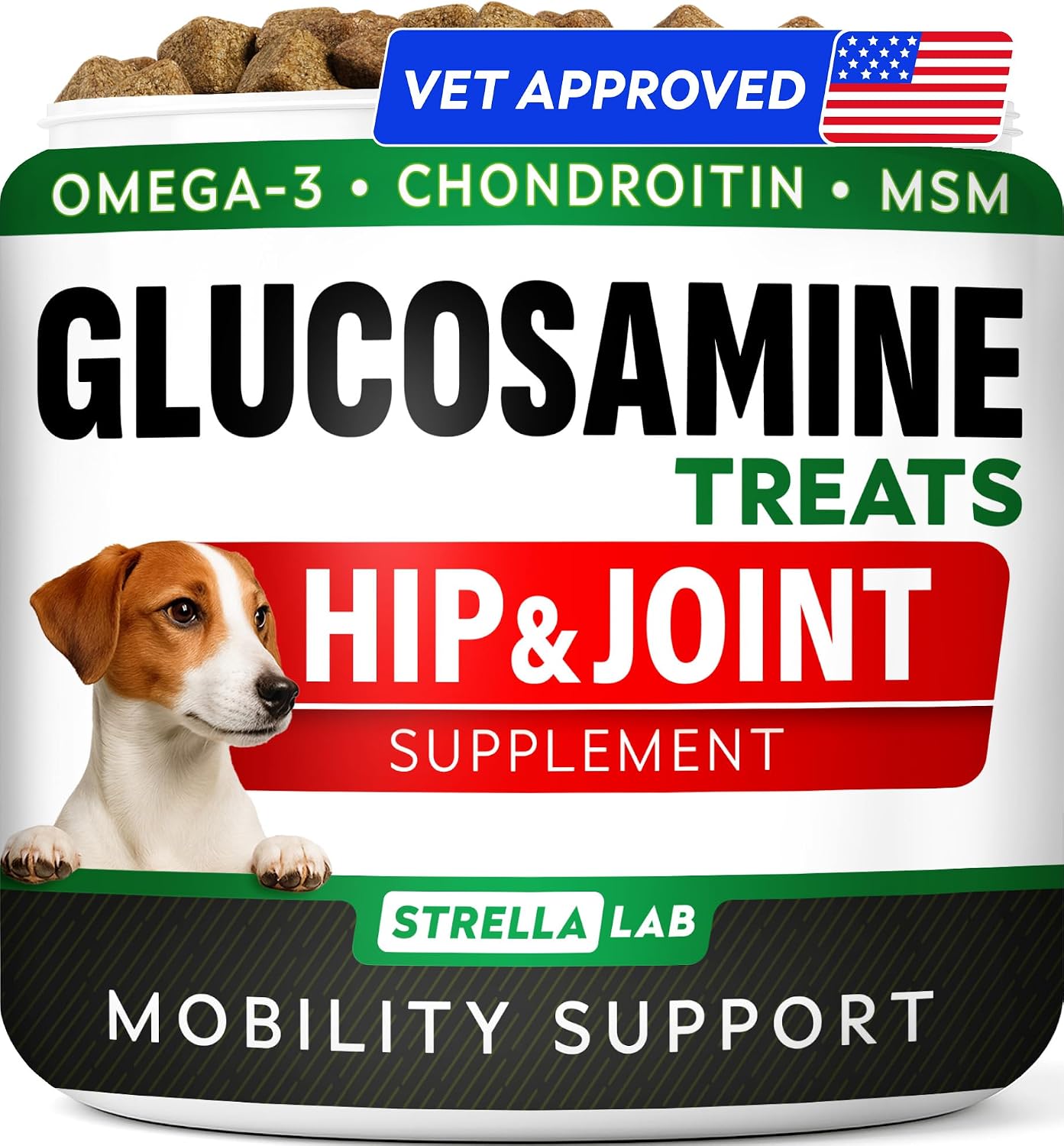
Glucosamine Treats for Dogs - Joint Supplement w/Omega-3 Fish Oil - Chondroitin, MSM - Advanced Mobility Chews - Joint Pain Relief - Hip & Joint Care - Chicken Flavor - 120 Ct - Made in USA
$17.94
*Affiliate link
Jope Hip & Joint Supplement for Dogs Large, Medium, Small - Joint Chews w/UC-II Collagen - Proven Better Than Glucosamine Chondroitin in Canine Health - Veterinarian Formulated, Omega 3 & Curcumin
$62.93
*Affiliate link

EHEYCIGA Orthopedic Extra Large Dog Bed, Waterproof Washable with Egg-Crate Foam & Non-Slip Bottom
$39.98
*Affiliate link
Frequently asked questions
How much does total hip replacement surgery cost for a large dog?
Total hip replacement (THR) for a large dog typically costs between $3,500 and $7,000 per hip at a specialty or academic veterinary hospital. When you factor in pre-surgical workup, rehabilitation therapy, follow-up imaging, and medications, the total out-of-pocket cost for one hip can reach $5,000–$9,000 or more. Dogs needing both hips replaced will face higher costs, though surgeons usually stage the procedures months apart.
Is FHO surgery a good option for a senior dog with hip dysplasia?
FHO (Femoral Head and Neck Ostectomy) can be a good option for senior dogs, particularly those in the small-to-medium weight range (under 50 lbs). It's less expensive than total hip replacement and doesn't require implants, but results in larger or heavier dogs are more variable. Your veterinarian and a board-certified orthopedic surgeon can evaluate whether your individual senior dog is a good candidate based on their weight, muscle mass, and overall health.
Can a senior dog safely undergo hip dysplasia surgery?
Many senior dogs do safely undergo hip dysplasia surgery with excellent outcomes, but age does increase certain risks — particularly related to anesthesia and recovery. Your vet will typically recommend pre-surgical bloodwork, urinalysis, and sometimes a cardiac evaluation to assess your dog's health status before proceeding. A board-certified veterinary anesthesiologist or an experienced surgical team at a specialty hospital can significantly reduce anesthetic risk in older dogs.
Does pet insurance cover hip dysplasia surgery?
Most comprehensive accident-and-illness pet insurance policies do cover hip dysplasia surgery — but only if the condition was not diagnosed (or showing symptoms) before the policy was purchased or during the waiting period. Hip dysplasia is almost universally classified as a pre-existing condition if it was noted prior to enrollment. If your dog hasn't been formally diagnosed yet, enrolling in a quality pet insurance plan as soon as possible is strongly advisable.
What are the non-surgical alternatives to hip dysplasia surgery for senior dogs?
Non-surgical management for hip dysplasia in senior dogs can include prescription NSAIDs for pain and inflammation (under veterinary supervision), joint supplements like glucosamine and omega-3s, weight management, physical rehabilitation therapy (hydrotherapy, laser therapy, therapeutic exercises), acupuncture, and injectable treatments like Adequan. Orthopedic supportive products such as memory foam beds and ramps also help reduce daily discomfort. While these options don't correct the underlying joint abnormality, they can maintain a good quality of life — especially for dogs who aren't ideal surgical candidates. Always consult your vet before starting any new treatment.