Best Mobility Aids for Senior Dogs That Can't Walk (2026 Guide)
When a senior dog loses the ability to walk on their own, the right mobility aid can restore independence and dramatically improve quality of life. This guide covers the best wheelchairs, support harnesses, slings, and carts for senior dogs — with honest pros, cons, and size guidance to help you choose the right fit.
12 min read · Updated 7/30/2026 · by Rafael Marques

Why Senior Dogs Lose the Ability to Walk — and How Aids Help
If your senior dog has stopped walking — or is struggling to get up, stumbling, or dragging their hind legs — you're not alone, and you haven't run out of options. Mobility loss in older dogs is one of the most common and heartbreaking challenges pet owners face, but the right mobility aid for senior dogs that can't walk can turn a frightening situation into a manageable one — and even a joyful one.
The most common culprits behind mobility loss in senior dogs include:
- Degenerative myelopathy (DM): A progressive neurological condition affecting the spinal cord, especially common in German Shepherds, Corgis, and Boxers. Dogs gradually lose coordination and strength in the hind limbs.
- Severe hip dysplasia or osteoarthritis: Inflammation and joint deterioration that makes bearing weight extremely painful.
- Intervertebral disc disease (IVDD): Especially common in Dachshunds, Corgis, and Basset Hounds — disc compression can cause sudden or gradual paralysis.
- Spinal tumors or trauma: Less common but serious causes of sudden mobility loss.
- Post-surgical recovery: Dogs may need temporary support after orthopedic or spinal surgeries.
Important: Always consult your veterinarian before introducing any mobility aid. A proper diagnosis determines which type of aid will help and rules out conditions that require surgery or medication. Your vet or a veterinary rehabilitation specialist can also help with fitting and training.
Mobility aids don't cure these conditions — but they dramatically improve quality of life by allowing your dog to move, exercise their remaining muscle mass, interact with their environment, and maintain their dignity. Let's find the right one for your dog.
Quick Picks: Best Mobility Aids for Senior Dogs in 2026
📝 Editor's note: Sooner or later, our senior dogs start having mobility issues. No matter what happened in the past, sometimes it's something that was already developing, or they just prefer to lie down more after a while, which ends up affecting their mobility.
Before we dive deep, here's a fast-glance summary for busy pet parents:
| Pick | Best For |
|---|---|
| Dog Wheelchair/Cart (rear support) | Senior dogs with hind-limb weakness or paralysis |
| Full-Body Lifting Harness | Dogs with general weakness in all four limbs |
| Rear-End Support Sling | Short-term assistance, post-surgical recovery |
| Front-Wheel Cart (quad wheelchair) | Dogs with weakness in all four legs (quadriplegic dogs) |
| Non-Slip Boots/Toe Grips | Early-stage mobility issues; knuckling and slipping |
The Main Types of Mobility Aids for Senior Dogs
1. Rear-Wheel Dog Wheelchairs (Dog Carts)
A rear-wheel dog wheelchair — sometimes called a dog cart — is arguably the most impactful mobility aid available for a senior dog with hind-limb paralysis or severe weakness. The dog's functional front legs do the walking while their paralyzed or weak back end rests in a padded saddle supported by two rear wheels.
How it works: The dog's hindquarters are supported in a canvas or neoprene saddle, and their legs either hang freely or rest on a rear bar. The cart is custom-fitted or adjustable to match the dog's body length, height, and weight.
Best for: Dogs diagnosed with degenerative myelopathy, severe arthritis limited to the hips/spine, or IVDD with hind-limb paralysis who still have strong, functional front legs. A dog wheelchair for back legs can be transformative for dogs in this category.
What to look for in a rear-wheel dog cart:
- Adjustability: Telescoping aluminum frames are far superior to fixed-frame designs. Your dog's muscle mass may change over time, and a cart that can't be adjusted will need replacing.
- Saddle material: Look for breathable, machine-washable neoprene or padded nylon. Avoid thin canvas slings that dig into groin tissue with prolonged use.
- Wheel type: Large, spoked bicycle-style wheels handle outdoor terrain better. Swivel caster wheels are fine for indoor use only.
- Weight capacity: Most rear carts are available in small (under 20 lbs), medium (20–50 lbs), and large (50–130+ lbs) sizes. Always measure your dog — don't guess.
- Knuckling foot rest: If your dog knuckles (drags their toes), a knuckling bar or toe strap prevents sores and pressure wounds.
Pros:
- Allows near-normal mobility and exercise
- Supports muscle maintenance in front limbs
- Dogs adapt quickly — many are running within days
- Available in custom and off-the-shelf sizes
Cons:
- Cannot be used unsupervised (dog can't get up if it tips)
- Dog still needs to be carried up stairs or into a car
- Higher price point ($200–$600+ for quality models)
- Not suitable for dogs with weak front legs
Who it's best for: A 9-year-old German Shepherd with DM who still has full front-limb strength, or a 12-year-old Dachshund recovering from IVDD surgery.
2. Quad/Four-Wheel Dog Wheelchairs
A quad wheelchair supports all four limbs and is designed for dogs with weakness or paralysis in both their front and hind legs — a far less common but profoundly difficult situation.
Best for: Senior dogs with advanced neurological conditions affecting all four limbs (quadriplegia), or dogs recovering from surgeries affecting the front and rear simultaneously.
What to look for:
- A fully adjustable, lightweight aluminum frame
- Padded chest and belly support saddles
- Swivel front wheels for easy steering
- Ability to convert from rear-only to quad as the condition progresses
Pros:
- Provides full-body support
- Allows the dog to remain upright and moving
- Some models are modular (add front wheels to an existing rear cart)
Cons:
- More expensive ($350–$800+)
- More complex to fit and adjust
- Dog has zero weight-bearing, which can reduce remaining muscle use
- Requires significant hands-on time

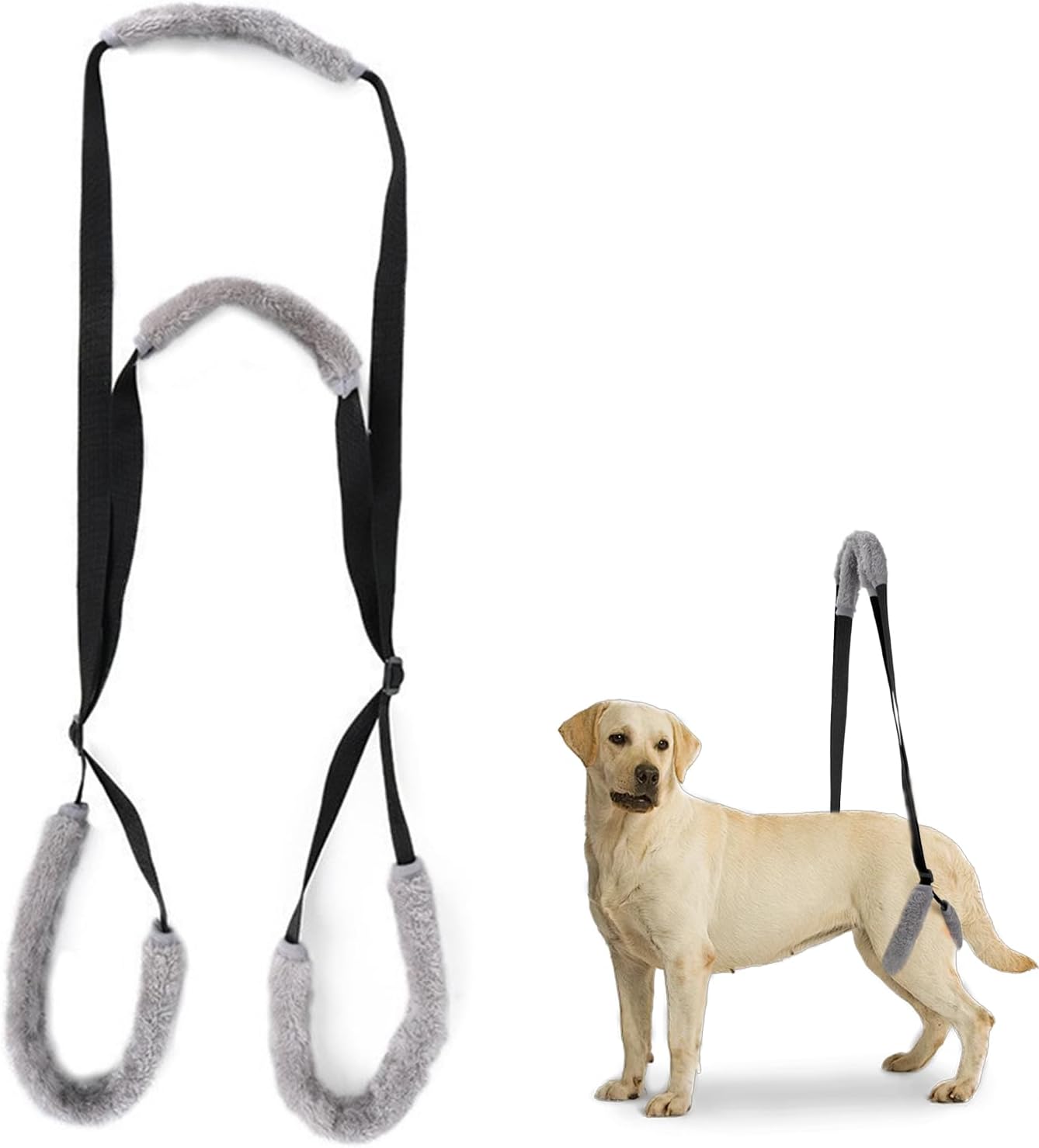
NIIIYTYB Sling for Dogs Back Legs Rear Support Harness for Paralyzed or Handicapped Pets Assistance Lift Slings for Hind Leg Mobility Small Dog Handicap Supplies for Joint Injuries and Stability Black
$9.49
*Affiliate link
3. Full-Support Dog Lifting Harnesses
A full-body lifting harness is the most versatile and affordable mobility tool you can own. Unlike a standard collar or vest, a true lifting harness has padded handles at the chest, mid-body, and/or rear so you can comfortably support your dog's weight while they try to walk.
Best for: Senior dogs with generalized weakness in all four legs who can still bear some weight with assistance — ideal for arthritic dogs, post-surgical recovery patients, or dogs in early-to-mid stages of neurological decline.
What to look for:
- Ergonomic handles: Long, padded handles reduce back strain for the owner — crucial if you have a 60-lb Lab
- Multiple lift points: Front, mid-body, and rear handles give you flexibility based on where your dog needs support most
- Padded belly and chest panels: Thin straps across the belly cause pressure sores fast in dogs used multiple times a day
- Machine washability: Non-negotiable for daily use
- Reflective stitching: Helpful if you're doing dawn/dusk bathroom walks
Pros:
- Affordable ($40–$120)
- No assembly required — on/off in seconds
- Great for partially mobile dogs who don't need a cart yet
- Doubles as a car-assist harness
Cons:
- Requires a human to be present and physically engaged
- Not a substitute for independent mobility
- Owner fatigue is real — long-term daily use is taxing
Who it's best for: A 13-year-old Golden Retriever with severe hip arthritis who can shuffle a few steps with support, or a Cocker Spaniel recovering from a cervical disc surgery.
4. Rear-End Support Slings
A rear sling is simpler and more affordable than a full harness — it's essentially a padded strap or cradle that loops under the dog's hindquarters, with handles you hold to support their back end while they walk on their front legs.
Best for: Short-term recovery, bathroom breaks, assisting an otherwise mobile dog who stumbles at the rear, and trial use before committing to a wheelchair.
What to look for:
- Wide, padded cradle area (narrow slings cause groin bruising)
- Sturdy, non-slip handles
- Adjustable length for your height
Pros:
- Very affordable ($20–$60)
- Compact and easy to store and travel with
- Great for occasional use or recovery
Cons:
- Not practical for long walks
- Requires you to bend over and maintain an awkward posture
- Doesn't work well for heavy dogs (50+ lbs)
Who it's best for: A 14-year-old Beagle with occasional hind-end weakness, or helping a post-op dog get outside for bathroom breaks during a 2-week recovery.
5. Toe Grips, Non-Slip Boots, and Paw Wraps
Before a dog loses the ability to walk entirely, there's often a period of slipping, stumbling, and knuckling — where the paws drag or fold under instead of planting flat. Non-slip solutions can meaningfully extend a dog's independent mobility during this phase.
- Toe grips (rubber rings): Slip over the toenails and provide traction on hardwood, tile, and laminate floors. Simple, low-profile, and surprisingly effective for mild neurological symptoms.
- Non-slip socks/boots: Add grip and protect paws from floor abrasion when a dog drags their feet. Look for boots with thick rubber soles and secure closures.
- Paw protection wax: Not technically a mobility aid, but essential if your dog is knuckling — it prevents pad abrasions.
Best for: Early-stage DM or arthritis, indoor slipping, and dogs in physical rehabilitation programs.
Pros:
- Very affordable ($15–$50)
- Non-invasive
- Can be combined with any other mobility aid
Cons:
- Limited use once a dog loses significant strength
- Some dogs resist wearing boots
Comparing Mobility Aids at a Glance
| Aid Type | Price Range | Mobility Offered | Owner Effort | Best Stage |
|---|---|---|---|---|
| Rear Wheelchair | $200–$600+ | High (independent) | Low (once fitted) | Moderate–advanced hind-end loss |
| Quad Wheelchair | $350–$800+ | Moderate–high | Moderate | Advanced all-limb loss |
| Full-Body Harness | $40–$120 | Moderate (assisted) | High | Early–moderate weakness |
| Rear Sling | $20–$60 | Low–moderate | High | Recovery / mild weakness |
| Toe Grips/Boots | $15–$50 | Low boost | Low | Very early mobility issues |
How to Measure Your Senior Dog for a Mobility Aid
Getting the fit right is critical — an ill-fitted wheelchair causes sores, spinal misalignment, or simply won't be used. Here are the key measurements most manufacturers need:
- Withers height: Measure from the floor to the top of the shoulder blades.
- Body length: From the base of the neck to the base of the tail.
- Chest girth: The widest point around the chest, just behind the front legs.
- Groin-to-groin width: For wheelchair saddle width — measure across the belly between both hind legs.
- Weight: Essential for selecting the right frame and wheel size.
Pro tip: Many reputable wheelchair companies offer free fitting consultations and instructional videos. Some veterinary rehabilitation clinics stock demo units. Don't skip the fitting process — a $300 cart that causes pressure sores is worth nothing.
Setting Up Your Home for a Dog with Mobility Challenges
Even with the best mobility aid, your home environment matters enormously. Here are the changes that make the biggest difference:
- Non-slip rugs and mats on all hard flooring surfaces
- Dog ramps instead of stairs at every transition (couch, car, bed) — dog ramps for senior dogs are especially useful for reducing strain on fragile joints
- Raised food and water bowls to reduce neck strain and make eating less effortful — see our guide on best elevated food and water bowls for senior dogs for recommendations
- Orthopedic memory foam dog beds with low or zero entry height — your dog can't climb into a tall bolster bed anymore
- Baby gates to block staircases and prevent falls
- Waterproof bed covers — bladder control issues often accompany mobility loss, and keeping bedding sanitary protects skin health
Physical Therapy and Rehabilitation: Don't Skip This Step
A mobility aid works best as part of a broader care plan that includes veterinary physical rehabilitation. Certified canine rehabilitation practitioners (CCRPs) can:
- Recommend the right type of aid based on your dog's specific diagnosis
- Guide underwater treadmill therapy (hydrotherapy) to maintain muscle mass
- Show you passive range-of-motion (PROM) exercises to do at home daily
- Monitor disease progression and adjust equipment as needed
Ask your veterinarian for a referral to a certified canine rehabilitation therapist. Even a handful of sessions can dramatically improve outcomes and give you the confidence to support your dog at home. Additionally, joint supplements for senior dogs can complement physical therapy by supporting long-term joint health and reducing inflammation.
Buyer's Checklist: What to Look for in a Mobility Aid for Your Senior Dog
Before you purchase, run through this checklist:
- Veterinary diagnosis confirmed — you know which limbs are affected and why
- Dog's measurements taken accurately — withers height, body length, chest girth, weight
- Aid type matches the dog's condition — rear cart for rear-end paralysis; harness for generalized weakness
- Frame is adjustable — not a fixed size that can't adapt to muscle loss
- Padding is breathable and washable — you'll be cleaning it frequently
- Tried a sling or harness first — to see how your dog accepts the sensation of support before committing to a cart
- Return/exchange policy reviewed — reputable companies offer sizing exchanges
- Vet or rehab therapist has been consulted — especially for custom fitting
Our Top Recommendation
For most senior dogs with hind-end paralysis or severe weakness — the most common scenario — a well-fitted, adjustable rear-wheel wheelchair is the gold standard. It gives your dog back the thing they need most: the ability to move on their own terms, sniff around the yard, and feel like a dog again.
Pair it with a full-body lifting harness for bathroom breaks, car trips, and moments when the cart isn't on — and lay down non-slip rugs throughout your home. That combination covers the vast majority of daily mobility needs.
If your dog is in earlier stages of decline and still weight-bearing, start with a lifting harness or toe grips and reassess every 4–6 weeks. Mobility aids are not one-and-done purchases — they should evolve alongside your dog's condition.
Whatever you choose, you're already doing something remarkable: refusing to give up on your dog. With the right support, many dogs with paralysis or severe mobility loss go on to live happy, comfortable, and deeply loved lives for months or years more. 🐾
⚕️ Important: This article is for information only and isn't a substitute for advice from a licensed veterinarian. Always talk to your vet before changing your senior pet's diet, supplements, or treatment.
Recommended products
NIIIYTYB Sling for Dogs Back Legs Rear Support Harness for Paralyzed or Handicapped Pets Assistance Lift Slings for Hind Leg Mobility Small Dog Handicap Supplies for Joint Injuries and Stability Black
$9.49
*Affiliate link

Adjustable Dog Lift Harness Dog Sling Portable Dog Sling for Back Legs Harness for Senior, Injured, Disabled Dogs After ACL Surgery (S)
$9.99
*Affiliate link

OneTigris Dog Lift Harness for Large Dogs, Dog Hip Support Brace, Full Body Lifter with Handles Invictus Multifunctional Mobility Assistance Vest for Back Legs (Black, Large)
$69.99
*Affiliate link
Frequently asked questions
Can a dog that can't walk at all use a wheelchair?
Yes — in fact, dogs with complete hind-limb paralysis are often ideal wheelchair candidates, as long as they have strong, functional front legs to propel the cart. Many dogs with degenerative myelopathy or spinal cord injuries adapt to a rear-wheel cart remarkably quickly, sometimes within just a few sessions. However, always get a veterinary evaluation first to confirm the diagnosis and ensure a cart is medically appropriate for your dog's specific condition.
How do I know if my senior dog is in pain versus just weak?
This is a really important distinction that only your veterinarian can make definitively. Signs of pain include vocalizing when touched or moved, guarding specific body parts, panting at rest, reluctance to be handled, or significant changes in behavior. Weakness without pain tends to look more like stumbling, dragging, or collapsing without crying out. A vet examination — including possible X-rays or neurological tests — is essential before choosing a mobility aid, as a painful dog may need medication before or alongside any device.
How long can my dog stay in a wheelchair each day?
Most veterinary rehabilitation experts recommend starting with short sessions of 10–15 minutes, two to three times daily, and gradually building up as your dog gains comfort and stamina. Most dogs can eventually use a cart for 30–60 minutes per session. Dogs should never sleep in a wheelchair unsupervised, as tipping is a fall risk. Consult your vet or a certified canine rehabilitation therapist for a schedule tailored to your dog's specific condition and fitness level.
What size wheelchair does my senior dog need?
Size is determined by several key measurements: withers height (floor to shoulder), body length (neck base to tail base), chest girth, groin-to-groin width, and body weight. Most reputable wheelchair brands offer small (under 20 lbs), medium (20–50 lbs), large (50–90 lbs), and extra-large (90+ lbs) frames, some with significant adjustability within each size. Always take careful measurements with a soft tape measure and, when in doubt, contact the manufacturer's customer service — many offer free fitting assistance.
Is a dog wheelchair covered by pet insurance?
It depends on your policy. Some comprehensive pet insurance plans do cover medically prescribed durable medical equipment, including wheelchairs, when deemed necessary by a licensed veterinarian. Others categorize carts as non-covered assistive devices. Check with your insurer directly, and ask your vet to provide a written prescription or medical necessity letter — that documentation significantly increases the chance of reimbursement. If you don't have insurance, some non-profit organizations and rescue groups offer loaner carts or financial assistance programs.